





Jump to
Say you got hurt in a fall on someone else’s property in Anaheim. You’re likely facing two fights at once. The first is your own recovery. The second is a property owner and their insurer. They move fast to clean up the hazard and shift the blame onto you.
This guide covers what the fall data really shows. It covers what California law actually says about your rights. And it covers how a strong claim gets built, from day one. It uses the same evidence property owners hope disappears before anyone asks for it. This is the same kind of premises liability case our Orange County team handles across every city we serve, including Anaheim.
Fall Injury Statistics: What the Data Actually Shows
Here’s the picture pulled straight from the CDC‘s own numbers, not a vague guess.
| Metric | Figure | Source |
| Older adults (65+) who report a fall each year | Over 14 million, or 1 in 4 | CDC |
| ER visits from older adult falls each year | About 3 million | CDC |
| Fall-related hospital stays each year | About 1 million | CDC |
| Rise in the national fall death rate, 2018 to 2024 | 21% | CDC |
| California’s fall death rate for adults 65+ (2023) | 40.0 per 100,000, among the lowest in the U.S. | National Center for Health Statistics |
That last row matters. California is actually one of the safer states for deadly falls. But “safer” doesn’t mean “safe.” Millions of falls each year still cause broken bones and torn ligaments. Many cause head injuries too. None of that ever shows up in a death count. A fall doesn’t need to be fatal to change your life or drain your savings.
California's Real Duty of Care Rule
Property owners don’t get to look away and call it bad luck. Under California law, they owe a general duty of reasonable care. That duty covers nearly everyone who steps onto their land. That rule traces back to a landmark 1968 case, Rowland v. Christian, decided by the California Supreme Court. It threw out the old, rigid categories that used to protect careless owners. Today, the real question isn’t “were you technically invited?” It’s simpler than that. Did the property owner act with reasonable care to keep the place safe?
Common Causes of Slip and Falls in Anaheim
Most falls trace back to the same handful of hazards, over and over again.
Wet Floors at Restaurants and Retail Stores
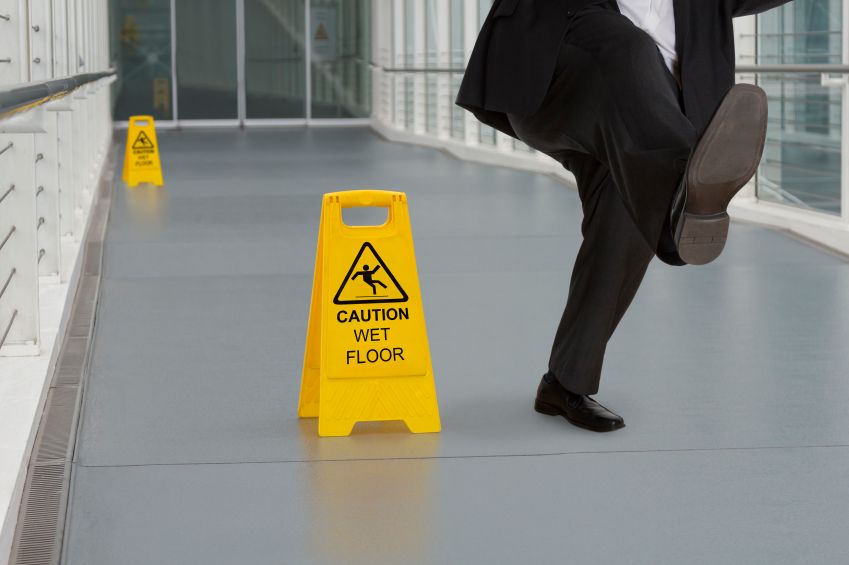
Anaheim’s dining and retail scene stretches from GardenWalk to Anaheim Plaza. It brings heavy foot traffic every day. That traffic brings spilled drinks and tracked-in rain. It also brings freshly mopped floors with no warning sign in sight. A property owner has a duty to check for these hazards on a regular schedule. They also need to clean them up or warn visitors within a reasonable time.
Parking Lots Near Major Venues
The massive lots and garages that serve Angel Stadium and the Anaheim Convention Center see constant use. Cracked pavement, potholes, and dim lighting turn these lots into common fall sites. A hidden crack that a visitor can’t see in the dark can take someone down hard.
Hazards at Disneyland and Other Attractions
Anaheim is the theme park capital of Southern California. That brings its own risks. Exposed cables, poorly marked steps, and stray equipment left in walkways can all cause a serious fall, even at a well-run park. Crowded parade routes and character meet-and-greets add extra jostling too. That can turn a minor hazard into a real injury fast. These claims often involve a large corporate defendant. That makes early legal help even more important.
Damaged Flooring in Apartments and Businesses
A bunched-up rug at an entrance is a real hazard. So is torn carpet on a stairway. Damaged flooring in a business along corridors like Euclid Street or Harbor Boulevard counts too. Property managers have a duty to keep walkways clear and secured.
Where These Falls Happen Across Anaheim
Anaheim spans a lot of ground, and different parts of the city carry different risks. Downtown Anaheim and the Anaheim Resort District see heavy foot traffic tied to tourism and dining. Anaheim Hills carries more residential and apartment complex claims. The Platinum Triangle, near Angel Stadium, sees a mix of parking structure falls and event-driven crowd hazards. Knowing where your fall happened helps in a few ways. It affects which agency responds, what camera footage might exist, and which venue rules apply to your claim.
Civil lawsuits from Anaheim, including most slip and fall cases, are typically filed with Orange County Superior Court. Most go to the Central Justice Center in Santa Ana. A local attorney who regularly appears there already knows the judges. That local knowledge of filing rules can save real time on your case.
Proving Negligence: What "Notice" Really Means
Winning a slip and fall claim almost always comes down to one legal question. Did the property owner know, or should they have known, about the hazard?
Actual Notice
This is the simplest kind of proof. An employee saw the spill and didn’t clean it up. A manager got a complaint about the broken step and ignored it. Actual notice means someone in charge truly knew about the danger before you got hurt.
Constructive Notice
This one is trickier. It’s where most cases actually get won or lost. Constructive notice means the hazard sat there long enough. A careful owner should have caught it during normal checks. Surveillance footage showing a spill sitting untouched for twenty minutes can prove this on its own.
Not sure if you have enough proof? A free case review with Kohan & Bablove costs nothing. We can tell you quickly whether your evidence supports a strong claim. Reach out today.
Common Injuries From Slip and Fall Accidents
A fall can cause damage far beyond a bruise, and some of the most serious injuries aren’t obvious right away.
| Injury Type | Why It’s Serious |
| Hip and pelvic fractures | Often require surgery, especially in older adults, with long recovery times |
| Wrist and arm fractures | Common when someone instinctively breaks their fall with their hands |
| Head injuries and concussions | Can be mild at first, then worsen over hours or days without treatment |
| Spinal injuries | Range from chronic back pain to partial or full paralysis in severe falls |
| Torn ligaments and soft tissue damage | Often underestimated early on, but can require months of physical therapy |
Who Can Be Held Liable Beyond the Property Owner
The property owner isn’t always the only party who can be held responsible for your fall.
-
A Tenant Business Renting the Space
In a strip mall or shopping center, the business leasing the space often controls day-to-day upkeep. A separate landlord usually still owns the building itself. A restaurant tenant usually handles spills inside the dining room. The property owner might handle the parking lot instead. Sorting out who controlled what takes a real look at the lease.
-
Third-Party Management and Maintenance Companies
Property owners often hire outside companies to handle daily operations. This can include a property management firm or a janitorial company hired to clean and make repairs. If those contractors were careless, they can be held financially responsible too. Hiring someone else to do the job doesn’t erase the property owner’s own duty either. That’s why a full investigation often uncovers more than one name worth pursuing.
What to Do Immediately After a Fall
The steps you take in the first few minutes can make or break your claim later.
- Report the fall right away to the property manager or owner. Ask for a written incident report, and get a copy before you leave.
- Photograph the hazard immediately, from a few different angles. Wet floors get mopped up fast, and cracked pavement gets patched within hours.
- Get names and numbers from any witnesses before they leave. An independent account can become some of your strongest evidence later.
- Seek medical care the same day, even if you feel okay at first. Adrenaline can hide fractures, concussions, and soft tissue damage for hours.
- Follow all medical advice and keep every appointment. Insurers look for gaps in treatment as an excuse to downplay your injuries.
- Stay off social media about your fall. A single photo from a family event can get twisted to argue you’re not really hurt.
- Avoid giving a recorded statement to the property owner’s insurer until you’ve talked to a lawyer first.
How Kohan & Bablove Builds Your Case
Evidence in a slip and fall case disappears fast. Acting early is often the whole difference between a strong claim and a weak one.
Securing Surveillance Footage Before It’s Gone
Many businesses only keep video for a short window before it gets overwritten. We send a formal legal letter right away. It demands that the property owner preserve any footage of your fall, before it can conveniently vanish.
Pulling Maintenance Logs and Inspection Records
Businesses often keep what’s called “sweep sheets.” These logs show when floors were checked and cleaned. They can reveal a missed inspection on the exact day you fell. That turns a simple denial into hard proof of negligence.
Bringing in Engineering and Safety Experts
For serious injuries, we work with experts who can testify about building code violations. They can also speak to unsafe conditions more broadly. That kind of testimony can turn a “he said, she said” dispute into a scientifically backed case.
What Is Your Anaheim Slip and Fall Claim Worth?
There’s no fixed number for a fall case. Two people with similar injuries can land very different settlements. It often comes down to the strength of the evidence and how severe the harm really is.
| Injury Severity | Typical Settlement Range | Key Value Driver |
| Minor sprains, bruising | $5,000 to $25,000 | Length of treatment, missed work |
| Broken bones requiring surgery | $50,000 to $200,000 | Hardware, permanent limits |
| Traumatic brain injury | $100,000 to $1,000,000+ | Severity, cognitive impact |
| Spinal injury or paralysis | $500,000 to several million | Lifetime care costs, policy limits |
These figures are general guides, not a value for your specific case. The property owner’s insurance coverage often sets a real cap on what’s collectible. That’s exactly why identifying every possible policy matters.
Wondering what your fall is really worth? Talk to our team before you accept any offer from the property owner’s insurer.
Why Trust Kohan & Bablove With Your Claim
Kohan & Bablove was founded by former insurance defense lawyers. They spent years learning exactly how adjusters build a case to pay victims as little as possible. Now they use that same insight for the people filing the claims, not the companies fighting them.
Direct Access to a Partner, Not a Case Manager
You work directly with a partner throughout your case. Your file never gets handed to a paralegal after the first call. That means faster answers and a strategy that never gets lost between handoffs. You can review real past outcomes on our case results page.
No Fee Unless You Win
Every slip and fall case runs on contingency. We cover the costs of building your case ourselves. You only pay a fee once we actually recover money for you.
Recognition Built on Peer Review
The firm’s work has drawn notice from groups like Super Lawyers and the Orange County Trial Lawyers Association. Both groups run on peer review, not paid placement.
Who Should Talk to a Slip and Fall Lawyer
Not every fall needs a lawsuit. But certain situations almost always call for a real conversation with a lawyer early on.
- Your injuries needed more than a single ER visit or urgent care trip
- The property owner or their insurer has already reached out for a statement
- The fall happened at a large venue like Disneyland, GardenWalk, or the Convention Center
- More than one party, like a landlord and a tenant business, might share the blame
- You’re not sure whether your injuries are fully healed yet
If any of these sound familiar, reaching out early costs nothing and can only help protect your claim.
The Statute of Limitations: Don't Wait to Act
California gives most fall victims two years from the date of the injury to file a lawsuit. That deadline comes from California Code of Civil Procedure Section 335.1. If your fall happened on government property, like a public park or a city sidewalk, that window can shrink fast. You often get just six months instead.
Missing either deadline usually ends your right to compensation for good. This is general legal information, not advice about your specific case. Some facts can change the rule. Confirming your exact deadline early costs nothing and protects every option you have.
Talk to an Anaheim Slip and Fall Lawyer Today
You didn’t cause the hazard that hurt you. You shouldn’t have to fight a property owner’s insurer alone while you’re still healing. An Anaheim personal injury lawyer from Kohan & Bablove will investigate your fall. We’ll handle every conversation with the insurance company for you. And we’ll fight for the full value of your claim.
For a broader look at how firms in this space compare, see our guide to Orange County slip and fall lawyers. Consultations are free, confidential, and come with no obligation. You pay nothing unless we win your case.
Schedule your free consultation or call (949) 535-1341 today.