





Jump to
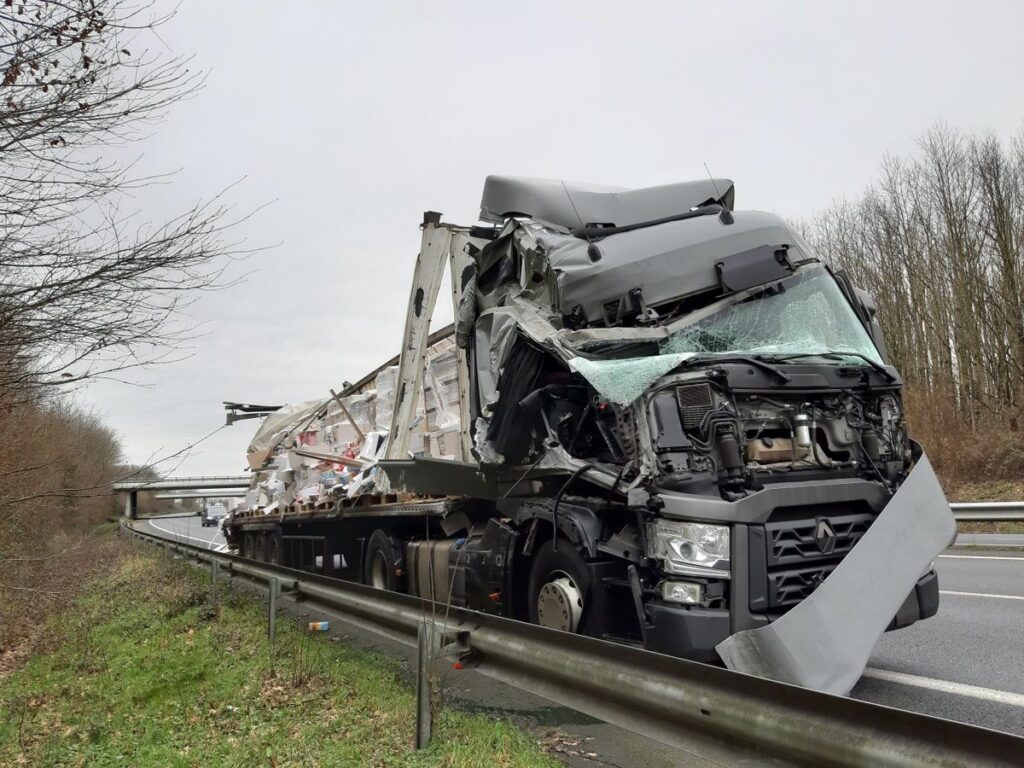
Truck crash claims work differently than a normal car accident case. A tractor-trailer isn’t just a bigger vehicle. It’s a commercial operation with federal safety rules. It comes with a trucking company that has its own insurance. And it comes with evidence that can vanish within days if nobody moves fast.
This guide covers what the crash data actually shows. It covers who can really be held responsible. And it covers how a strong truck accident claim gets built, before key evidence disappears for good.
Truck Accident Statistics: What the Data Shows
Here’s the picture pulled from the most current federal sources.
| Metric | Figure | Source |
| People killed in large truck crashes nationally (2024) | 5,340 | National Safety Council / NHTSA |
| Share of those deaths who were riding in other vehicles | 70% | National Safety Council / NHTSA |
| Large trucks involved in injury crashes nationally (2024) | 120,724, up 5.4% from 2023 | National Safety Council / NHTSA |
| People killed in large truck crashes in California (2023) | 392, the 2nd-highest total of any state | FMCSA / NHTSA |
| Rise in large-truck deaths over the last 10 years | 30% | National Safety Council |
Source: National Safety Council, Large Trucks
That rising 10-year trend matters. More trucks are on the road, and more people get hurt when something goes wrong. A loaded semi can weigh over 20 times more than a passenger car. That weight gap alone often decides who walks away and who doesn’t. This holds especially true on high-traffic corridors like the 5, the 57, and the 91 that all run through Anaheim.
Why Truck Crashes Are Different: Who's Really Liable
A truck crash rarely comes down to just one driver’s mistake. Real fault often spreads across several parties. Finding all of them is what separates a full payout from a partial one.
The Truck Driver
Speeding, distraction, and fatigue cause a large share of truck crashes. Drivers face real pressure to hit tight delivery windows. That pressure sometimes wins out over safety.
The Trucking Company
Companies can be held liable for hiring an untrained driver. They can also be blamed for skipping required training, or pushing drivers to break federal rest rules. A company’s own policies are often part of the problem, not just the driver behind the wheel. Some carriers even reward drivers for finishing routes faster. That quietly pushes drivers toward the exact behavior the safety rules try to stop.
The Trucking Company’s Insurer
Commercial trucks carry much larger insurance policies than a typical driver. These often run into the millions. That size cuts both ways. It means real money is available if the case is built right. It also means the insurer has more at stake, and more lawyers working to protect it.
Cargo Loaders and Third Parties
A poorly loaded or overweight trailer can make a truck unstable or hard to stop. When a separate loading company packed the cargo, that company can share the blame too.
Government Agencies
Local and state agencies are responsible for maintaining safe roads. A pothole, missing sign, or broken guardrail on a road they control can point to a government agency. That agency can become a liable party too. These claims move on a much faster clock, often just six months to file a formal claim.
Vehicle and Parts Manufacturers
Brake failures, tire blowouts, and coupling defects sometimes trace back to a bad part rather than driver error. These cases usually need a fast, expert look before a damaged part gets fixed or scrapped.
Here’s a quick summary of how these parties typically differ:
| Potentially Liable Party | What They’re Responsible For |
| Truck driver | Speeding, distraction, fatigue behind the wheel |
| Trucking company | Hiring, training, and pressuring drivers to break rules |
| Insurer | Paying out the claim once fault is established |
| Cargo loader | Overweight or unstable loading of the trailer |
| Government agency | Road defects, missing signage, poor maintenance |
| Parts manufacturer | Defective brakes, tires, or coupling systems |
Hours of Service Rules and Driver Fatigue
Federal rules limit how long a commercial driver can stay on the road without rest. Here’s how the core limits break down for most truck drivers.
| Rule | Limit |
| Maximum driving time | 11 hours, after 10 straight hours off duty |
| Maximum on-duty window | 14 hours total before driving must stop |
| Required rest breaks | At least 30 minutes after 8 hours of driving |
| Weekly driving cap | 60 to 70 hours, depending on the carrier’s schedule |
These rules exist for a simple reason. A tired driver behind an 80,000-pound truck is genuinely dangerous. Trucking companies sometimes push drivers to fudge their logs anyway, just to meet a delivery deadline. When that happens, the crash that follows often points straight to a rule violation. A lawyer can use that violation as strong proof of negligence.
Think a tired driver caused your crash? A free consultation with Kohan & Bablove costs nothing, and we can start pulling the driver’s logs right away. Reach out today.
The Evidence That Disappears Fast
Winning a truck accident claim almost always comes down to proof that trucking companies would rather not hand over.
Black Box and ECM Data
Most commercial trucks carry an electronic control module, much like an airplane’s black box. It records speed, braking, and engine data from the moments right before a crash. This data can get overwritten or “lost” within days. That happens fast unless someone sends a legal letter demanding it stay preserved.
Driver Logs and Inspection Records
Federal law requires most drivers to log their hours electronically. Maintenance records can also show whether a known mechanical problem went ignored before the crash. Both kinds of records tend to disappear the longer a claim sits untouched.
Dashcam and Traffic Camera Footage
More trucks now carry forward-facing cameras. Nearby traffic cameras sometimes catch the crash too. This footage often gets deleted on a short loop. Sometimes that happens within a week or two, unless someone requests it fast.
What to Do After a Truck Accident in Anaheim
The steps you take in the first hours and days shape both your health and your claim.
- Call 911 right away. A truck crash almost always needs police at the scene to create an official report.
- Get medical care right away, even if you feel fine. Adrenaline can hide serious injuries like internal bleeding for hours.
- Photograph everything you safely can, including vehicle damage, skid marks, cargo spillage, and the truck’s company markings.
- Get the truck’s DOT number and license plate if you’re able to. This helps find the exact carrier at fault.
- Avoid speaking with the trucking company’s insurer before you’ve talked to a lawyer. They often call within hours of the crash.
- Call a truck accident lawyer as soon as possible. Evidence preservation starts on day one, not after weeks of delay.
How Kohan & Bablove Builds Your Case
Beating a trucking company’s legal team takes more than a demand letter. It takes a real investigation that starts on day one.
Preserving Evidence Before It’s Gone
We send formal legal letters right away. They demand that the trucking company preserve black box data, driver logs, and maintenance records. Without that letter, routine data cycles can wipe those records out for good within days.
Bringing in Accident Reconstruction Experts
For serious crashes, we work with engineers who can rebuild the exact sequence of events. They use physical evidence to do it, not guesswork. We never just take the trucking company’s version of what happened.
Finding Every Party at Fault
We look past the driver alone. We also look at the trucking company and the cargo loader. We look at any parts maker whose failure may have played a role too. That way, no available insurance policy gets missed.
What Is Your Anaheim Truck Accident Claim Worth?
There’s no fixed number for a truck accident case. Two crashes with similar damage can settle for very different amounts. It often comes down to injury severity and how clearly fault gets proven.
| Injury Severity | Typical Settlement Range | Key Value Driver |
| Soft tissue injuries, whiplash | $20,000 to $75,000 | Length of treatment, missed work |
| Broken bones requiring surgery | $75,000 to $300,000 | Hardware, permanent limits |
| Amputation or traumatic brain injury | $150,000 to $1,000,000+ | Severity, future care, cognitive impact |
| Spinal injury, paralysis, or wrongful death | $500,000 to several million | Lifetime care costs, policy limits |
These figures are general guides, not a value for your specific case. Insurance coverage on commercial trucks tends to run much higher than a standard driver’s policy. That can open the door to a bigger payout when the case gets built the right way.
Not sure what your case is worth? Talk to our team before you accept any offer from the trucking company’s insurer.
Why Trust Kohan & Bablove With Your Claim
Kohan & Bablove was founded by former insurance defense lawyers. They spent years learning exactly how insurers and trucking companies try to shrink a claim. Now they use that same insight to fight for the people filing them instead.
Direct Access to a Partner, Not a Case Manager
You work directly with a partner throughout your case. Your file never gets handed to a paralegal after the first call. That means faster answers and a strategy that never gets lost between handoffs. You can review real past outcomes on our case results page.
No Fee Unless You Win
Every truck accident case runs on contingency. We cover the costs of building your case ourselves, including expert witnesses. You only pay a fee once we actually win money for you.
Recognition Built on Peer Review
The firm’s work has drawn notice from groups like Super Lawyers and the Orange County Trial Lawyers Association. Both groups run on peer review, not paid ads.
Who Should Talk to a Truck Accident Lawyer
Not every fender-bender with a delivery van needs a lawyer. But certain situations almost always call for one.
- You were hurt badly enough to need ongoing medical care, not just a one-time ER visit
- The trucking company’s insurer has already reached out asking for a statement
- You suspect the driver was fatigued, speeding, or on the road too long
- A loved one was killed or seriously hurt in the crash
- The truck involved was clearly overweight, poorly loaded, or missing safety markings
If any of these sound familiar, the sooner a lawyer gets involved, the more evidence there is left to work with.
The Statute of Limitations: Don't Wait to Act
California gives most crash victims two years from the date of injury to file a lawsuit. That deadline comes from California Code of Civil Procedure Section 335.1. If a government vehicle or agency was involved, that window can shrink to just six months.
Missing either deadline usually ends your right to any payout for good. This is general legal information, not advice for your exact case. Some facts can change the rule. Acting fast matters even more in truck cases, since key evidence can disappear long before a two-year deadline ever arrives.
Talk to an Anaheim Truck Accident Lawyer Today
You’re up against a trucking company with its own lawyers. Their insurance adjusters often start working the case within hours of your crash. You shouldn’t have to face that alone. An Anaheim personal injury lawyer from Kohan & Bablove will investigate your crash right away. We’ll preserve the evidence that matters most. And we’ll fight for the full value of your claim.
For a broader look at how these claims work, see our Orange County truck accident attorney page. You can also read about common causes of Anaheim car accidents more generally.
Consultations are free, confidential, and come with no obligation. You pay nothing unless we win your case.
Schedule your free consultation or call (949) 535-1341 today.