

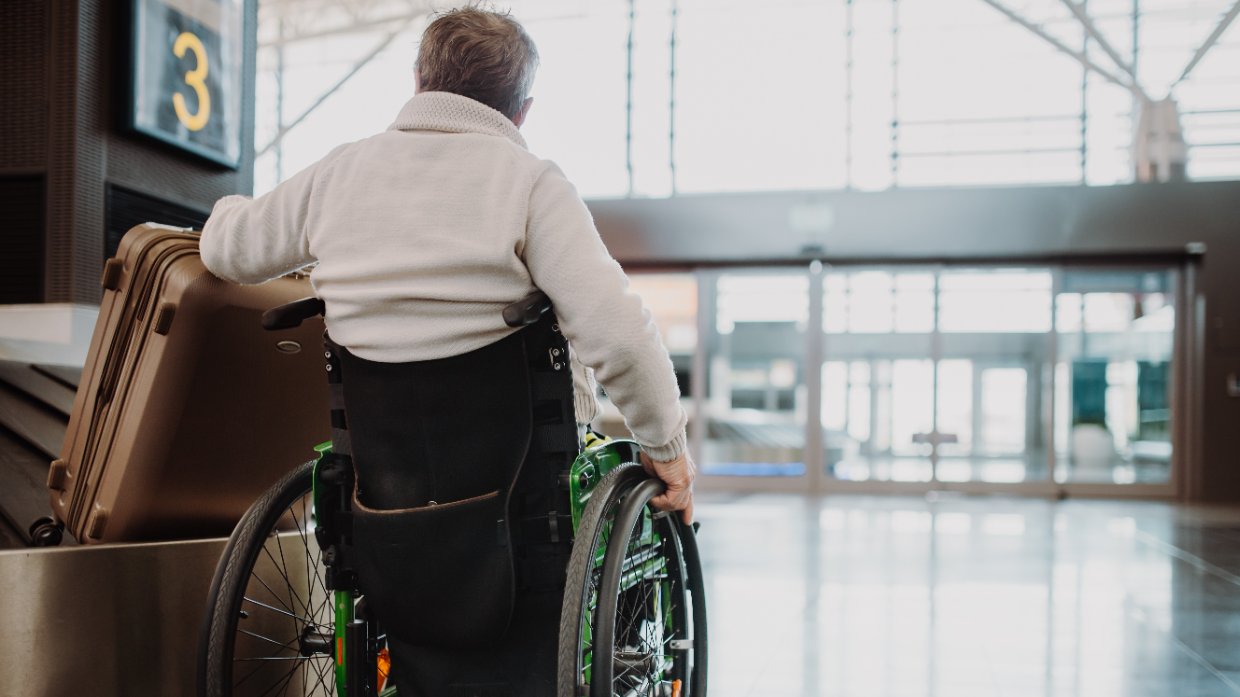
On August 15, a 64-year-old man using a wheelchair was killed in Stanton when a driver lost control during a two-car collision and veered onto the sidewalk where he was traveling. It’s a devastating reminder that pedestrians, including those using wheelchairs and other mobility devices, face real danger even when they’re doing everything right. Here’s what California law says about your rights after a pedestrian accident, and what most people don’t realize applies specifically to wheelchair and mobility-device users.
Quick answer: California law treats wheelchair users the same as any other pedestrian under Vehicle Code § 467, meaning drivers owe them the same duty of care, and injured pedestrians can pursue compensation through the at-fault driver’s insurance, their own uninsured motorist coverage, or a government claim when a defective sidewalk or crosswalk contributed to the crash.
Pedestrians Always at Risk
Vehicle occupants aren’t the only ones at risk on California roads, pedestrians consistently make up a disproportionate share of traffic deaths. In 2023, California recorded 1,106 pedestrian fatalities, and pedestrians have accounted for roughly a quarter of all traffic deaths statewide in recent years, well above the national rate of around 18 percent. Los Angeles County alone saw over 300 pedestrian deaths in a recent year, and Orange County sees its own steady toll of crashes involving people on foot, in crosswalks, and using mobility devices on sidewalks that are supposed to be safe.
Are Wheelchair Users Legally Considered Pedestrians in California?
Yes, and this surprises a lot of people. California Vehicle Code § 467 explicitly defines “pedestrian” to include a person operating a self-propelled wheelchair, motorized tricycle, or motorized quadricycle due to a physical disability. That means every legal protection built around pedestrian right-of-way, crosswalk laws, and a driver’s duty of care applies fully to wheelchair users, whether they’re crossing at an intersection or, as in the Stanton case, simply traveling along a sidewalk. A driver doesn’t get a lower standard of care just because the person they struck wasn’t on foot in the traditional sense.
Wheelchairs on the Radar
The Stanton crash wasn’t an isolated incident. Around the same period, similar collisions involving wheelchair users were reported in roughly ten locations nationwide, including several other incidents across California where wheelchair users were struck while crossing streets. Cases like these tend to share a common thread: the wheelchair user was following the rules exactly as any pedestrian should, and the crash resulted entirely from a driver’s loss of control or failure to see them in time.
Injured While Using a Wheelchair or Mobility Device? Our attorneys understand the specific protections that apply to you as a pedestrian under California law. Call DKB Lawyers at (949) 535-1341 for a free consultation.
Common Causes of Pedestrian Accidents
Most pedestrian accidents trace back to a driver’s failure to see or yield to someone they were legally required to watch for. Distracted driving, failing to stop for a pedestrian in a crosswalk, speeding through residential areas, and impaired driving account for the large majority of cases, and each points toward a different party’s negligence and a different type of evidence needed to prove it.
| Common Cause | Typically Liable Party |
| Distracted or inattentive driving | The driver |
| Failure to yield at a crosswalk or intersection | The driver |
| Loss of vehicle control (mechanical failure, another collision) | The driver, or a second at-fault driver in a chain-reaction crash |
| Broken sidewalk, missing curb ramp, or poor lighting | The city or government agency responsible for maintenance |
Comparative Negligence: What If You Were Partly at Fault?
Insurers often try to shift some blame onto the pedestrian, especially in cases involving jaywalking or crossing outside a marked crosswalk. California’s “pure comparative negligence” rule means you can still recover compensation even if you’re found partially at fault, your award is simply reduced by your percentage of responsibility, not eliminated entirely. Importantly, California law also requires drivers to exercise due care to avoid colliding with a pedestrian even when that pedestrian technically violated their right-of-way, so a driver can’t automatically escape liability just by pointing to a jaywalking pedestrian.
What Damages Can You Recover After a Pedestrian Accident?
Compensation in a pedestrian accident claim generally covers the same categories as other injury cases, medical expenses, lost income, and pain and suffering, but where that money actually comes from can vary more than people expect. If the at-fault driver’s insurance is insufficient, your own uninsured/underinsured motorist coverage may apply. When a defective sidewalk, missing curb ramp, or malfunctioning crosswalk signal contributed to the crash, a claim against the city or government agency responsible becomes possible too, though those claims come with a much shorter six-month filing deadline than a standard injury claim. Our full guide to California’s statute of limitations by claim type breaks down exactly how that government-claim deadline works.
Not Sure Who’s Liable for Your Accident? A defective sidewalk or crosswalk may mean a government claim applies, with a much shorter deadline. Call DKB Lawyers at (949) 535-1341 today to protect your rights.