

Long term whiplash symptoms can continue long after the initial injury, affecting mobility, causing chronic pain, and impacting quality of life. Whiplash is a common yet often misunderstood injury caused by sudden, forceful back-and-forth motion of the neck. It frequently results from car accidents, sports injuries, and physical assaults. Understanding the common causes and how it impacts your life is essential for identifying symptoms early and seeking appropriate treatment. This article provides a clear guide to help you comprehend whiplash, its origins, and how it can affect your daily activities.
Key Takeaways
- Whiplash is primarily caused by sudden back-and-forth movements, most commonly from rear-end automobile collisions, which account for approximately 70% of cases.
- The symptoms of whiplash can include neck pain, stiffness, headaches, and cognitive difficulties, which may manifest immediately or be delayed, emphasizing the importance of early diagnosis and treatment.
- Treatment for whiplash often involves a multidisciplinary approach, including rest, medications, physical therapy, and chiropractic care, to address both physical and psychological aspects of recovery.
How Much Is a Whiplash Injury Settlement Worth?

Whiplash is a neck injury caused by rapid back-and-forth movement, most commonly triggered by rear-end car accidents (70% of cases), sports trauma, or assaults. It severely damages neck muscles, disks, nerves, and tendons.
A fair whiplash injury settlement must account for long-term impacts beyond temporary stiffness. Victims often endure chronic neck pain, headaches, anxiety, and depression. Because these physical and emotional burdens disrupt daily life, a comprehensive legal evaluation is vital to maximizing your final car accident claim.
Severity Tiers & Payout Ranges (Grades 1 to 4)
Medical professionals categorize whiplash across four distinct severity tiers:
- Grade 1 (Minor): Mild neck pain without objective signs. Payouts range from $2,500 to $10,000.
- Grade 2 (Moderate): Muscle spasms and limited motion. Settlements average $10,000 to $30,000.
- Grade 3 (Serious): Neurological symptoms or disc herniation. Compensation spans $30,000 to $100,000.
- Grade 4 (Severe): Structural fractures or spinal dislocations, often yielding $100,000 to $300,000+.
How Insurance Companies Calculate Financial Compensation
Insurers calculate payouts by adding economic damages (medical bills and lost wages) and applying a multiplier (1.5x to 5x) for non-economic pain and suffering.
To maximize your car accident claim, contact Kohan & Bablove Injury Attorneys in Orange County today
What Is a Whiplash Injury and What Does It Feel Like?
A whiplash injury occurs when a sudden impact forces your neck to whip rapidly back and forth, damaging muscles and ligaments. It typically feels like severe neck pain, stiffness, restricted motion, and headaches starting at the base of the skull. You may also experience dizziness, shoulder tenderness, or arm numbness.
Treating whiplash injuries typically involves a combination of rest, medications, and physical therapy. Early intervention is crucial to manage symptoms and promote healing, thereby preventing the development of chronic pain and other long-term issues.
Common Causes of Whiplash Injuries

The primary cause of whiplash injuries is sudden acceleration or deceleration, particularly prevalent in rear-end automobile collisions. However, whiplash can also result from other traumatic events such as sports injuries and physical assaults. Understanding these common scenarios helps in recognizing the risk factors and taking preventive measures to avoid such injuries.
Whiplash injuries can occur in various situations, from car accidents to contact sports and even physical abuse. Each scenario presents its unique challenges and contributes to the overall understanding of how these injuries occur and how they can be prevented and treated.
Car Accidents and Rear-End Collisions
Car accidents are the leading cause of whiplash, with rear-end collisions accounting for 70% of cases. Inertia forces the head to jerk violently, causing hidden soft-tissue damage. Women are statistically more vulnerable due to differences in neck strength. Because symptoms are often delayed, securing an immediate medical evaluation is vital to prevent chronic, life-changing conditions.
Sports Injuries and High-Impact Activities
Contact sports like football and boxing involve sudden, high-velocity impacts that whip the head forcefully. These sports-related whiplash injuries can trigger long-term neck pain and stiffness if neglected. Prompt chiropractic care and targeted physical therapy are essential to restore full mobility and protect an athlete’s future health.
Physical Assaults and Sudden Traumatic Falls
Whiplash can also result from physical abuse, blows, or sudden falls that subject the neck to violent acceleration. Victims often face severe physical trauma compounded by debilitating emotional distress. Securing immediate healthcare and psychological support is crucial for handling both the physical and mental aspects of personal injury recovery.
Recognizing the Signs and Symptoms of Whiplash
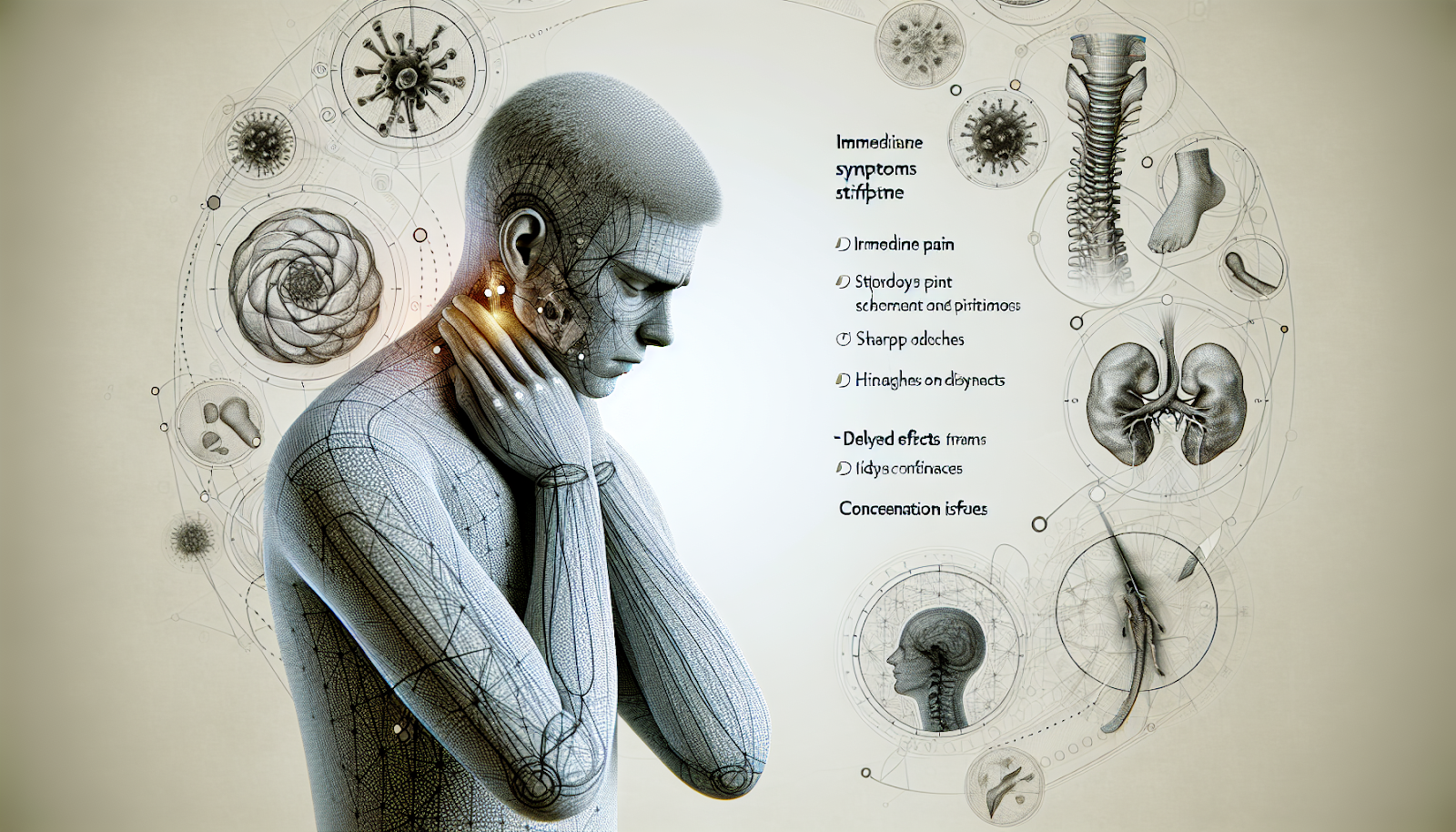
Early recognition of whiplash symptoms is crucial. This timely identification plays a key role in effective treatment and recovery.
Common symptoms of whiplash include:
- neck pain
- stiffness
- headaches
- dizziness
- potential cognitive difficulties
These symptoms can begin to appear within the first 24 hours after an injury but may not manifest immediately, making it important to monitor for any changes.
Delayed symptoms may include increased pain levels and cognitive difficulties, which can develop several days to weeks after the initial injury. Early diagnosis and treatment are essential to preventing the worsening of symptoms and chronic pain.
Immediate vs. Delayed Neck Pain After a Car Accident
Adrenaline can mask physical injuries immediately following a crash. While some victims feel instant stiffness, whiplash pain is frequently delayed, manifesting 24 to 48 hours after the incident as inflammation sets in.
Identifying Serious Whiplash Nerve Damage Symptoms
When a cervical disc herniates or tissue compresses local nerves, serious symptoms emerge. Watch out for shooting arm pain, persistent tingling or numbness in your fingers, and sudden muscle weakness in your hands.
The Long-Term Complications of Leaving Whiplash Untreated
Ignoring whiplash can lead to chronic complications. Untreated soft tissue damage often results in permanent neck stiffness, recurrent migraines, and accelerated spinal disc degeneration.
Contact Kohan & Bablove Injury Attorneys in Orange County today to protect your car accident claim.
How Is Whiplash Diagnosed by Medical Professionals?
Doctors diagnose whiplash through physical examinations that evaluate your neck’s range of motion, localized tenderness, and reflex responses. To check for deeper soft tissue damage, disc herniations, or bone fractures, physicians rely on diagnostic imaging such as X-rays, CT scans, or MRIs.
Medical Treatment Options for Whiplash and Cervical Strain

A comprehensive care plan accelerates your recovery and provides the objective medical documentation necessary to support your car accident claim.
Professional Therapy: Chiropractic Care and Physical Therapy
Physical therapy focuses on targeted stretching and exercises to rebuild neck muscle strength and safely restore your flexibility. Chiropractors utilize precise spinal adjustments to realign joints, alleviate pressure on compressed cervical nerves, and reduce chronic stiffness.
Medications and Clinical Pain Management
Physicians frequently prescribe muscle relaxants and high-dose anti-inflammatory drugs (NSAIDs) to manage acute neck pain. In severe cases where a whipped neck causes nerve damage, localized corticosteroid injections may be utilized to directly target and calm intense tissue swelling.
Safe Whiplash Treatment at Home and Self-Care Remedies
Initial home care centers on applying ice packs for 15-minute intervals during the first 48 hours to minimize active inflammation, followed by a transition to heating pads to soothe tense, aching muscles. While rest is vital, performing light, doctor-approved neck rotations prevents the joints from locking up during recovery.
The Impact of Chronic Whiplash Syndrome on Daily Life

Chronic whiplash syndrome causes long-term disruption to a victim’s daily routine. Persistent neck pain, migraines, and restricted mobility make simple tasks like driving or working excruciating. Furthermore, this constant discomfort triggers severe sleep disturbances, fatigue, and anxiety. This debilitating condition impairs personal relationships and lowers your quality of life. Contact the dedicated legal team at Kohan & Bablove Injury Attorneys.
Preventing Whiplash Injuries: Safety Features and Vehicle Mechanics
Preventing whiplash injuries requires a proactive approach, especially when driving. Here are some essential steps to consider:
- Use defensive driving techniques.
- Maintain safe distances.
- Obey speed limits.
- Adjust your seat and headrest properly.
- Avoid sudden acceleration or braking.
- Use your seatbelt correctly.
By following these guidelines, you can significantly reduce the risk of being involved in a car accident that causes whiplash.
It is recommended to keep at least a three-second gap when following other vehicles to help prevent whiplash injuries. Additionally, adjusting the headrest to the correct height to support the back of the head can limit neck movement during a collision, thereby reducing the risk of injury.
These simple adjustments can make a significant difference in protecting yourself from whiplash.
Summary: Critical Steps to Protect Your Health and Legal Claim
To safeguard your physical well-being and maximize your future car accident claim, execute these essential steps right away:
- Seek Prompt Medical Care: Obtain a professional evaluation within 72 hours.
- Preserve Clear Evidence: Retain all medical records, imaging, and bills.
- Consult Legal Counsel: Contact Kohan & Bablove Injury Attorneys immediately.
Frequently Asked Questions About Neck Injuries
What is the average recovery time for whiplash?
Most people recover within a few weeks, though severe cases can last months.
What are common causes of whiplash?
Rear-end car accidents, contact sports, slip-and-falls, and physical trauma.
What are the immediate symptoms of whiplash?
Neck pain, acute stiffness, dizziness, and headaches at the skull base.
How is whiplash diagnosed?
Through physical mobility exams and imaging tests like X-rays or MRIs.
How can whiplash injuries be prevented?
By properly adjusting your vehicle’s headrest and wearing your seatbelt.

Kohan & Bablove Injury Attorneys was founded by three former defense attorneys who were tired of helping insurance companies and big corporations save money by paying the least amount possible to resolve claims. We wanted to open a law firm where we could use our years of experience handling the toughest and largest claims to benefit the individual. Each of us were tired of being cogs in the wheel that focused on paying the least amount possible to injured persons regardless of injuries or the validity of their claims.
