
Getting into a truck accident can really mess up your life. You might be dealing with painful injuries, huge medical bills, and a whole lot of stress. It’s natural to wonder what kind of financial help you can get. Luckily, if someone else was at fault, you can usually seek money for your losses. The exact types of damages you can go after depend on what happened to you. This article breaks down the different kinds of damages you might be able to claim, from medical costs to emotional distress. A good Truck Accident Lawyer can help you figure out what you’re owed.

Economic Damages You Can Seek After a Truck Accident

Economic damages, often called special damages, are those with a specific dollar amount attached. Think of them as the costs you can easily prove with bills and receipts. Let’s break down the most common ones you might face after a truck accident.

Medical Expenses

Truck accidents often lead to serious injuries, and the costs can pile up fast. You can seek compensation for all medical care related to the accident. This includes:

  • Emergency medical care
  • Doctor visits
  • Hospital stays
  • Prescription medications
  • Physical therapy
  • Future medical treatments

To support your claim, make sure you see a doctor ASAP after the accident. Getting prompt treatment is important for your health and your case. It helps link your injuries directly to the crash. A good settlement offer should cover all of these costs.

Lost Wages and Earning Capacity

If your injuries keep you from working, you can claim lost wages. This covers the income you’ve already missed. But what if you can’t return to your old job, or any job, because of the accident? Then you might also be able to claim “loss of earning capacity.” This accounts for the income you would have earned in the future. It’s a bit more complicated to calculate, so talk to a truck accident lawyer if this applies to you.

Property Damage

Truck accidents often result in vehicles being totaled. You can seek compensation for the damage to your vehicle, whether it needs repairs or replacement. Property damage also includes other personal items damaged in the accident.

Transportation and Legal Fees

If you have to travel to doctor appointments or other destinations because of your injuries, you can usually claim those travel costs. Also, the costs of hiring your truck accident lawyer can typically be collected in your claim. Thankfully, many truck accident lawyers don’t take any fees unless they win you money—and you only pay after your case has been resolved. This removes any upfront costs or risks to you.

Documenting all these expenses is key. Keep records of everything – medical bills, pay stubs, repair estimates, and travel receipts. The more evidence you have, the stronger your claim will be.

Non-Economic Damages You Can Collect After a Truck Accident

Non-economic damages? These are the ones that don’t come with a neat price tag. They’re about compensating you for the suffering you’ve endured because of the truck accident. Unlike medical bills or lost wages, these are harder to quantify, but they’re just as real.

Pain and Suffering

This covers the physical discomfort and emotional distress you’ve experienced. It’s about acknowledging the disruption to your life and well-being. This can include everything from chronic pain to the emotional trauma of the accident. It’s not just about the immediate aftermath; it’s about the long-term impact on your quality of life. To get compensation for pain and suffering, you’ll need to document the impact the accident has had on your life.

Mental Anguish

Truck accidents can leave deep emotional scars. Mental anguish includes things like:

It’s the emotional toll the accident takes on you, and it can be just as debilitating as any physical injury.

Dealing with mental anguish after a truck accident is tough. It’s not something you can just shake off. It’s important to seek help, whether it’s therapy, medication, or just talking to someone you trust. Don’t underestimate the impact of the accident on your mental health.

Scarring and Disfigurement

Visible scars and disfigurement can have a huge impact on your self-esteem and confidence. This type of damage aims to compensate you for the emotional distress and social challenges that come with permanent physical changes. It’s about acknowledging the lasting impact on your appearance and how it affects your life. It’s important to document the extent of the scarring and disfigurement with photos and medical records.

Wrongful Death Damages After a Loved One Dies in a Truck Accident

If a truck accident results in a fatality, the victim’s family may be able to pursue a wrongful death claim. This type of claim seeks compensation for the losses the family has suffered due to the death of their loved one. It’s a difficult time, and understanding your rights is important. A Riverside wrongful death lawyer can help you navigate this process.

Lost Wages and Benefits

One of the primary damages in a wrongful death case is the loss of the deceased’s future earnings. This includes not only their salary or wages but also any benefits they would have received, such as health insurance, retirement contributions, and other perks. Calculating this loss can be complex, often requiring the expertise of a financial professional to project the deceased’s earning potential over their expected lifetime. It’s about figuring out what the family has lost financially because of the accident.

Loss of Care or Companionship

Beyond the financial aspects, a wrongful death claim also addresses the emotional and personal losses the family experiences. This includes the loss of the deceased’s care, guidance, and companionship. The value of this loss is subjective and can be challenging to quantify, but it represents the profound impact the death has on the family’s relationships and overall well-being. The loss of a parent’s guidance or a spouse’s support can have lasting effects. 

Punitive Damages in Truck Accident Cases

Sometimes, after a truck accident, you might be able to get punitive damages. These aren’t meant to cover your losses. Instead, they’re designed to punish the person who caused the accident and to stop others from doing the same thing.

Punishing the Wrongdoer

Punitive damages from truck accidents aren’t awarded in every case. They’re usually only given if the person who caused the accident did something really bad, like acting with malice or gross negligence. Think of a truck driver who was drunk or intentionally ignored safety rules. The court might award punitive damages to really make an example of them. punitive damages are not automatic.

It’s like saying, “You messed up so badly that you need to be punished beyond just paying for the damages you caused.”

Discouraging Future Misconduct

The idea behind punitive damages is to send a message. It tells other people and companies that if they act recklessly, they’ll face serious consequences. This can help make roads safer for everyone. Here are some ways this works:

  • Companies might invest more in safety training.
  • Drivers might be more careful about following the rules.
  • The public is made aware of the consequences of negligence.

Understanding Special Damages in Truck Accident Claims

When you’re dealing with truck accident injury claims, it’s important to understand the different types of damages you can pursue. Special damages, also known as economic damages, are those with a specific dollar amount attached to them. These are the tangible losses you’ve experienced as a result of the accident.

Documenting Specific Dollar Amounts

To recover special damages, you need solid documentation. This means keeping records of all expenses related to the accident. Here’s what you should gather:

  • Medical bills: Keep every bill from doctors, hospitals, physical therapy, and any other medical treatment you’ve received.
  • Pay stubs: These will help prove your lost wages if you had to take time off work.
  • Repair estimates: Get estimates for vehicle repairs or replacement costs.

Evidence for Economic Losses

Providing evidence is key to a successful claim. You’ll need to show how the accident directly caused these financial losses. This might include:

  • Receipts for medications and medical supplies.
  • Documentation of travel expenses to and from medical appointments.
  • Any other out-of-pocket expenses related to the accident.

Remember, the more detailed and organized your documentation, the stronger your claim will be. Don’t underestimate the importance of keeping track of every expense, no matter how small it may seem at the time.

General Damages and Their Impact on Truck Accident Victims

General damages, often called non-economic damages, are a bit trickier than the straightforward costs like medical bills. They aim to compensate you for things that don’t have a specific price tag, like the emotional and physical toll the accident takes on your life. It’s about how much compensation for a truck accident injury you deserve for the less tangible, but very real, impacts.

Compensating for Suffering

General damages are designed to address the suffering you endure after a truck accident. This includes:

These damages acknowledge that a truck accident’s impact goes beyond just the financial costs. It’s about recognizing the human cost of the incident.

Calculating Non-Economic Value

Figuring out the monetary value of non-economic damages can be challenging. Insurance companies often use formulas, like multiplying your economic damages by a certain number. The multiplier depends on the severity of your injuries and the impact on your life.

It’s important to document everything. Keep a journal detailing your pain levels, emotional state, and how the accident has affected your daily activities. This evidence can be crucial in demonstrating the true extent of your suffering and maximizing your compensation for types of damages in a truck accident case.

When a big truck causes an accident, the people hurt often face many challenges, not just physical pain. Things like emotional distress, lost enjoyment of life, and ongoing suffering are real and can be very hard to deal with. If you’ve been through this, it’s important to know your rights. Kohan & Bablove Injury Attorneys to learn more about how we can help you understand your options and get the support you need.

Conclusion

So, when you’ve been in a truck accident, it’s pretty clear things can get messy. You’re looking at medical bills, maybe you can’t work, and then there’s all the emotional stuff that just sticks with you. The good news is, if it wasn’t your fault, you can probably get money for those things. We’re talking about economic damages, which are the easy-to-count costs, and non-economic damages, which are more about your pain and suffering. Sometimes, if things were really bad, there are even punitive damages to punish the person who caused the crash. It’s a lot to figure out on your own, especially when you’re trying to heal. That’s why getting a lawyer involved early on is a smart move. They can help sort through all the details and make sure you’re asking for everything you deserve.

Frequently Asked Questions

What kinds of money can I get after a truck accident?

After a truck accident, you can ask for money to cover your medical bills, lost wages, and damage to your stuff. If your injuries are very serious, you might also get money for your pain and suffering. In some special cases, you could even get extra money to punish the truck company if they did something really bad.

What are economic damages?

Economic damages are costs that have a clear price tag, like your hospital bills, the money you didn’t earn because you couldn’t work, and the cost to fix or replace your car. These are usually easy to count up with receipts and bills.

What are non-economic damages?

Non-economic damages are for things that don’t have a set price, like the physical pain you went through, the emotional upset, or if your injuries changed your life in a big way. These are harder to put a number on, but they are still very real and important.

Can I get money if someone I love died in a truck accident?

Yes, if a loved one died in a truck accident, close family members can often file a claim for wrongful death. This can help cover things like lost income from the person who passed away, funeral costs, and the loss of their love and support.

What are punitive damages?

Punitive damages are not about paying you back for your losses. Instead, they are meant to punish the person or company that caused the accident if they acted really carelessly or dangerously. They also serve as a warning to others not to do the same thing. These are only given in rare cases.

Why do I need a lawyer for my truck accident claim?

It’s really smart to get a lawyer quickly after a truck accident. They can help you figure out all the different types of money you can ask for, gather the right papers, and deal with the insurance companies. This makes sure you get all the money you deserve for your injuries and losses.

Parking lots are tricky places, right? They seem simple, but figuring out who’s at fault after a fender bender can be a real headache. Unlike regular roads, parking lots have their own set of unspoken rules, and sometimes, even the official ones get ignored. This article will help you understand everyday situations, what evidence matters, and why knowing who’s responsible is a significant concern for your insurance and wallet.

Determining Fault In a Parking Lot Accident

Determining fault after a Parking Lot Accident can be surprisingly tricky. It’s not always as straightforward as accidents on a regular road. Insurance companies will thoroughly investigate the details to determine what happened and conduct a thorough investigation of the accident.

Understanding Shared Fault

It’s common for both drivers to share some degree of fault in a parking lot collision. This means that instead of one person being 100% responsible, the blame is split. For example, one driver might be speeding while the other is pulling out without checking their blind spot. In these cases, any settlement or court award will be reduced by the percentage you were at fault. So, if you’re found to be 20% responsible, you’ll only receive 80% of the damages.

Rules of the Road Still Apply

Even though it’s a parking lot, many of the standard rules of the road still apply. This includes things like:

  • Yielding to oncoming traffic.
  • Obeying stop signs.
  • Maintaining a safe speed.
  • Paying attention to pedestrians.

Ignoring these rules can contribute to a finding of fault. Just because it’s a parking lot doesn’t mean you can disregard caution.

Common Parking Lot Collision Scenarios

Rear-End Accidents

Parking lots might seem like low-speed zones, but determining fault in a rear-end collision still happens. The driver in the rear is often presumed to be at fault, but there are exceptions. For example, if the front car suddenly reverses without warning, the fault might shift. It’s essential to gather evidence, such as witness statements or dashcam footage, to clarify the situation.

Pulling Into and Out of Parking Spots

These accidents are super common. It usually boils down to who had the right of way. If you’re backing out, you have to yield to traffic already in the lane. If two cars are backing out at the same time, it can get tricky. Insurance companies will look at things like:

  • Point of impact
  • Witness statements
  • Any available video footage

It’s always a good idea to proceed slowly and cautiously when pulling into or out of a parking spot. A glance can prevent a lot of headaches.

Left Turn Accidents

Parking lots often lack clear traffic signals, making left turns a free-for-all. Generally, the driver making a left turn must yield to oncoming traffic. If a collision occurs, the left-turning driver will likely be considered at fault. However, if the other driver was speeding or otherwise driving recklessly, fault could be shared. It’s all about determining who had the right of way and whether anyone was acting negligently.

Right-of-Way Rules in Parking Lots

Thoroughfare Versus Feeder Lanes

Parking lots often feature a system of lanes, and it’s essential to understand how they operate. Think of it like this: there are main roads (thoroughfare lanes) that run around the perimeter, and smaller lanes (feeder lanes) that branch off into the parking spots. Generally, cars in the thoroughfare lanes have the right-of-way. If you’re pulling out of a feeder lane and collide with someone in a thoroughfare, you’re likely at fault. It’s similar to how streets work, but on a smaller scale.

Yield and Stop Signs

Just like on regular roads, traffic signs matter in parking lots. If there is a yield or stop sign, you must obey it. Ignoring these signs is a surefire way to cause an accident and be held liable. It doesn’t matter if it’s a parking lot; traffic laws still apply. So, keep an eye out for those signs and follow them carefully. If a driver violates a stop or yield sign, they will likely be found at fault. Traffic signs apply in parking lots as they do anywhere. Remember always to be aware of your surroundings and follow the rules of the road, even in a parking lot. If you’ve been injured in a parking lot, consider reaching out to pedestrian accident attorneys for assistance.

Exceptions to Right-of-Way

While the thoroughfare-feeder lane rule is common, there are exceptions to it. For example, if a car in the thoroughfare is speeding excessively, that could shift the fault, even if it technically had the right of way. Additionally, if the thoroughfare driver fails to obey a stop or yield sign that gives the right of way to vehicles exiting the parking lanes, that could alter the situation. It’s not always black and white, and the specifics of the situation matter.

It’s essential to remember that even if you have the right of way, you still have a responsibility to avoid an accident if possible. Defensive driving is key, even in a parking lot. Pay attention to what other drivers are doing, and be prepared to react to unexpected situations.

Cases of Fault

Hitting a Parked Car

Okay, so you dinged a parked car. It happens. But what you do next is super important. Leaving the scene? Big mistake. Always try to find the owner if possible; leave a note with your contact information and a brief explanation. Most states require you to report the incident to the police, especially if there is significant damage. It’s way better to be upfront than to face hit-and-run charges later.

Pedestrian Accidents

Parking lots can be hazardous places for pedestrians. Drivers need to be extra careful, watching out for pedestrians, especially near store entrances. If a car hits a pedestrian, the driver is often at fault, but not always. It depends on the circumstances. Was the pedestrian jaywalking? Were they paying attention? Was the driver speeding or distracted? These things matter.

Distracted Driving

Distracted driving is a huge problem everywhere, and parking lots are no exception. Texting, talking on the phone, and messing with the radio – all of these things can take your attention away from the road, even at low speeds. If you cause an accident due to distraction, you will likely be held at fault. It’s not worth it. Just put the phone down and focus on driving, especially in a crowded parking lot.

It’s easy to get complacent in parking lots because speeds are low. However, that’s precisely when accidents tend to happen. Pay attention, be aware of your surroundings, and drive defensively.

The Role of the Parking Lot Owner

Duty to Maintain Safe Conditions

Parking lot owners aren’t just raking in cash; they have a responsibility to keep their lots reasonably safe. This means ensuring the parking area is designed and maintained to minimize the risk of accidents. Think about it: clear lane markings, visible traffic flow directions, pedestrian crosswalks, and functional stop signs are all part of this duty. Without these, it’s a free-for-all, and accidents are bound to happen.

Suing the Owner for Negligence

If a parking lot’s poor condition contributed to your accident, you might have grounds to sue the owner for negligence. This could be used instead of, or in addition to, suing the other driver, depending on who is at fault. To prove negligence, you’ll generally need to show:

  • The owner had a duty to maintain a safe environment.
  • They breached that duty (e.g., didn’t fix a known hazard).
  • This breach directly caused your accident.
  • You suffered damages as a result.

It’s important to document everything. Take photos of the hazard, get witness statements, and keep records of your medical bills and car repair estimates. This evidence will be crucial in building your case.

Hazards Causing Crashes

So, what exactly constitutes a hazardous condition in a parking lot? Here are a few examples:

  • Inadequate lighting makes it hard to see at night.
  • Potholes or uneven surfaces can cause drivers to lose control.
  • Obstructed views due to overgrown bushes or poorly placed signs.
  • Lack of proper signage or traffic control devices.

If any of these hazards cause crashes, the parking lot owner could be held liable. It’s not just about the other driver; sometimes, the environment itself is to blame.

Why Fault Matters for Your Claim

It’s easy to think of parking lot fender-benders as minor inconveniences. Still, the reality is that determining fault can have a significant impact on your wallet and your insurance rates. Let’s break down why.

Impact on Car Insurance Coverage

Fault directly influences whose insurance pays for the damages. If you’re found at fault, your insurance will likely cover the other driver’s repairs and any injuries they sustain, but your rates may increase. If the other driver is at fault, their insurance should cover your damages. It’s essential to report a minor accident to your car insurance company, even if it seems small.

Financial Responsibility of Uninsured Drivers

If the at-fault driver is uninsured, the situation becomes complicated. You may need to rely on your uninsured motorist coverage or consider pursuing legal action to recover damages. This is where things can become extremely expensive, very quickly. An uninsured driver is personally liable for injuries, vehicle damage, and other losses.

Dealing with an uninsured driver after a parking lot accident can be a headache. It often involves legal processes to recover costs, which can be time-consuming and stressful.

Collision Coverage Considerations

Even if you’re at fault, collision coverage can help cover the cost of your vehicle’s repairs. However, please note that you’ll still be responsible for paying your deductible. Weigh the deductible cost against the repair expenses to determine if filing a claim is worthwhile. Determining who is at fault can be challenging, but it’s essential to decide on the course of action.

Next Steps After a Parking Lot Accident

Post-Accident Protocol

So, you’ve just had a fender-bender in a parking lot. What now? First things first, make sure everyone is okay. Check yourself and any passengers for injuries. Then, check on the other driver and their passengers. Even if it seems minor, it’s essential to stay calm and assess the situation.

  • Call the police: Even though it’s a parking lot, having a police report can be super helpful, especially if there’s damage or disagreement about what happened.
  • Exchange information: Get the other driver’s name, contact info, insurance details, and license plate number. Make sure they get yours too.
  • Document everything: Take photos of the damage to both vehicles, the parking lot layout, any relevant signs or markings, and the general scene. The more evidence, the better.

It’s easy to get flustered after an accident, but try to stay organized. Write down everything you remember about how the accident happened while it’s still fresh in your mind. This will be useful when you talk to your insurance company or a lawyer.

Seeking Legal Counsel From a Car Accident Lawyer

The accident was more complicated than a simple scratch. Or you’re unsure about what to do next. That’s where a car accident lawyer comes in. They can help you understand your rights and options, especially if there are injuries, significant damage, or disputes about who’s at fault. A lawyer can investigate the accident, gather evidence, negotiate with insurance companies, and even represent you in court if necessary.

Working With Your Insurance Company

Dealing with insurance companies can be a headache, but it’s a necessary step after a parking lot accident. Here’s the deal:

  • Report the accident: Contact your insurance company as soon as possible to report the incident. Provide them with all the necessary details, including the police report (if available), photos, and the other driver’s information.
  • Cooperate with the investigation: Your insurance company will likely investigate to determine fault and assess the damage. Be honest and cooperative, but refrain from admitting fault or speculating about what happened.
  • Understand your coverage: Review your insurance policy to understand what is covered and your applicable deductibles. This will help you estimate your out-of-pocket expenses.

After a parking lot accident, knowing what to do next can be tricky. Don’t worry, we’re here to help you figure it out. If you’re feeling lost or need guidance, please don’t hesitate to reach out to us. Kohan & Bablove Injury Attorneys to learn more about how we can assist you.


Frequently Asked Questions

How is fault decided in a parking lot accident?

It can be challenging to determine who is at fault in a parking lot crash. Insurance companies will examine factors such as traffic signs, the location where the cars collided, and even videos to determine the outcome. Sometimes, both drivers might share the blame.

Who is usually at fault in a rear-end parking lot accident?

Usually, if you hit the car in front of you, it’s your fault, even in a parking lot. Drivers are supposed to keep a safe distance. So, if the car ahead of you stops suddenly and you hit it, you’re likely to be held responsible.

Do regular traffic laws apply in parking lots?

Yes, the usual traffic rules still apply in parking lots. This means you need to follow stop signs, yield signs, and understand who has the right of way. If you break these rules, you’ll likely be found at fault.

What happens if I hit another car while backing out of a parking space?

If you back out of a parking spot and hit another car, whether it’s moving or parked, you’re usually at fault. If two vehicles back out at the same time and collide, it can be harder to determine who is at fault because both drivers should have been cautious.

What should I do if I hit a parked car?

If you hit a parked car, try to find the owner; if you can’t, leave a note with your contact information and insurance details. If you don’t try to find the owner, you could be charged with a hit-and-run.

Why is figuring out fault so crucial in a parking lot accident?

Fault matters a great deal because it determines whose car insurance will cover the damage and any resulting injuries. If the person at fault doesn’t have insurance, they might have to pay for everything themselves. Also, if you only have basic insurance, your car damage might not be covered.

Car accident claims help you recover medical costs, lost wages, property damage, and other forms of losses. California is an at-fault state, so you can recover damages if the other driver caused the crash. A car accident lawyer can help you file a claim demanding full compensation. However, you must prove the other driver’s negligence before you can get any money. The insurance company is more likely to settle your claim if you provide the relevant supporting evidence. Here’s a sample of the types of evidence your may need for a car crash claim, and how you can gather this evidence after your accident.

Photos and Videos

You should take plenty of photos and videos at the crash scene if you’re able. These photos and videos should capture any damage to the vehicles involved, skid marks on the road, and damage to surrounding property like a damaged pole or wall. The photographic evidence should also capture the injuries you suffered. Make sure you capture close-up photos of the injuries so that you can later substantiate your claim for damages. You should also snap photos of the surrounding landscape to create a clearer picture of the accident. Your photos should include any traffic control devices located near the scene.

Police Reports

California law requires you to report an accident involving injury, death, or property damage exceeding $1,000. Once you report the crash, law enforcement officers arrive on the scene. These officers file a report covering the basics of the crash. This report is an invaluable piece of evidence. You can obtain a copy of this report from the relevant department. This report is a key piece of evidence in establishing negligence in an accident.

Witness Details and Statements

Finally, the contact details of all the parties involved and present at the crash scene are useful pieces of evidence. You need the details of the other drivers to file your insurance claim. Contact details of the witnesses are useful as you may later need to contact them and get their statements. Witness statements can be a powerful form of evidence in car crash claims.

Get Help from a Southern California Car Accident Lawyer

Car accident claims can take a long time to settle. In general, the more evidence you have to back your claim, the sooner your claim is likely to settle. It can be daunting to gather this evidence on your own. This is where a Southern California car accident lawyer can help you. At Kohan & Bablove Injury Attorneys, we help Riverside County crash victims recover full compensation for their losses. Our lawyers can help you fulfill legal requirements, gather evidence, file the claim, and negotiate effectively with insurers, starting with a free consultation. To discuss your case with our lawyers, call us today at 949.535.1341. You can also fill out our online contact form below to get in touch with us.

Find a Car Accident Lawyer Office below:

Kohan & Bablove Injury Attorneys Address: 20371 Irvine Ave Suite 110, Newport Beach, CA 92660 Phone: +1 949.535.1341

Dealing with a dog bite can be upsetting, and if it occurs in Orange County, California, you may be wondering what your next steps should be. It’s not just about getting medical help; there are also legal considerations to consider. One significant aspect is the timeframe for taking legal action. This is known as the ‘statute of limitations,’ and it’s vital for any dog bite injury claim. If you miss this deadline, you could lose your chance to get compensation for your injuries. So, let’s break down what you need to know about these time limits and how they work in California, especially for dog bite cases.

Understanding California’s Dog Bite Statute

Defining Strict Liability In Dog Bite Cases

California operates under a strict liability statute regarding dog bites. This means that a dog owner is liable for the damages their dog inflicts, regardless of the dog’s past behavior or the owner’s knowledge of any dangerous propensities. It doesn’t matter if the dog has never bitten anyone before; the owner is still responsible. This is a crucial point to understand, as it simplifies the legal process in many cases.

Orange County Specific Regulations For Dog Bites

While California law sets the overall framework, Orange County might have its specific regulations regarding dog ownership and control. These include leash laws, rules about where dogs are allowed, and exact penalties for violations. It’s always a good idea to check the local ordinances in Orange County to see if any additional rules apply to your situation. These local rules can influence how a dog bite case is handled.

Statute Of Limitations For Dog Bite Injury Claims

General Two-Year Rule For Filing A Claim

In California, if a dog has bitten you, it’s super important to know about the California statute of limitations for dog bite cases. Generally, you have two years from the date of the bite to file a lawsuit. This is standard for personal injury claims in California. If you wait longer than that, you’ll likely lose your chance to sue for damages.

Consequences Of Missing The Filing Deadline

Missing the deadline to file a dog bite lawsuit can have serious consequences. If you don’t file within the two-year window, the court will most likely dismiss your case. This means you won’t be able to recover any compensation for your medical bills, lost wages, or pain and suffering. It’s a hard deadline, so it’s best not to take a risk.

Exceptions To The Two-Year Statute

Minors And Mental Incapacity Provisions

The standard two-year rule isn’t always set in stone. There are situations where the clock can be paused or extended. One typical exception involves minors. If a child is bitten, the two-year statute of limitations doesn’t start ticking until they turn 18. This gives them time to pursue a claim once they’re adults. Similarly, if someone is mentally incapacitated at the time of the bite, the statute might be paused until they regain their mental capacity. This is to protect those who can’t advocate for themselves.

Defendant Leaving The State After Incident

Another exception pops up when the dog owner skips town. If the person responsible for the dog bite leaves California after the incident but before a lawsuit can be filed, the statute of limitations can be put on hold. The clock stops running while they’re out of state. This prevents people from avoiding responsibility by simply disappearing. It’s essential to note that this doesn’t apply if the individual was already out of state when the bite occurred. You may need a dog bite lawyer to help you with this situation.

Distinctions From Other Personal Injury Claims

Similarities With General Personal Injury Timelines

Many aspects of dog bite cases share similarities with those of other personal injury claims. For instance, the need to gather evidence, assess damages, and negotiate with insurance companies is a common thread that runs through these cases. You’ll find that the basic steps involved—filing a claim, conducting discovery, and potentially going to trial—are pretty similar. However, it’s the strict liability aspect that sets dog bite cases apart.

Unique Aspects Of Dog Bite Strict Liability

California’s strict liability law, as it applies to dog bites, means that the dog owner is liable for damages, even if the dog has never shown any prior signs of aggression. This is a significant departure from many other personal injury cases, where negligence must be proven. In a slip and fall case, for example, you’d need to demonstrate that the property owner was negligent in maintaining a safe environment. However, with dog bites, the primary focus shifts to whether the bite occurred and the extent of the resulting injuries. This can streamline the legal process, but it also means understanding the nuances of premises liability in Orange County is key.

Streamlined Legal Proceedings In Dog Bite Cases

Because of the strict liability standard, dog bite cases can sometimes be more straightforward than other personal injury claims. The burden of proof is often less demanding, as you don’t necessarily need to prove the owner was negligent. However, this doesn’t mean these cases are always simple. Factors like proving the bite occurred, establishing the extent of damages, and dealing with insurance companies can still present challenges. It’s also important to remember that defenses can still be raised, such as provocation or trespassing.

The legal landscape after a dog bite can be overwhelming. Understanding the specific laws and procedures involved is essential to protecting your rights and securing fair compensation. Don’t hesitate to seek legal advice to ensure you’re on the right track.

Negotiations And Settlement Discussions

Do Discussions Extend The Statute Of Limitations?

It’s a common question: Does talking about a settlement pause the clock on the statute of limitations? The simple answer is usually no. Just because you’re in talks with the dog owner’s insurance company doesn’t mean you can relax about the deadline. The two-year statute of limitations continues to tick away while you’re negotiating. Don’t assume that friendly chats will protect your right to file a lawsuit. It’s essential to keep that deadline in mind, even if things seem to be going well.

Written Agreements To Toll The Statute

There’s one major exception to the rule that negotiations don’t pause the statute of limitations: a written agreement. Both parties can sign a document that tolls the statute of limitations for a specific period. This gives you more time to negotiate without the pressure of the deadline. Ensure that any such agreement is in writing and clearly states the duration for which the statute is paused. Without a written agreement, you’re taking a significant risk.

Risk Of Losing Legal Rights Without Timely Filing

Missing the statute of limitations can be devastating to your case. If you don’t file a lawsuit within two years of the dog bite, you could lose your right to sue altogether. Insurance companies are aware of this, and they may use it to their advantage. They might drag out negotiations, hoping you’ll miss the deadline. If that happens, they have less incentive to offer a fair settlement. It’s a challenging situation, but it underscores the importance of acting promptly and being aware of the dog bite statute.

Failing to file your claim on time can severely weaken your position. The other side knows you can’t take them to court, which reduces their incentive to offer a fair settlement. This can leave you with unpaid medical bills and no way to recover damages.

Protecting Your Dog Bite Injury Claim

Steps To Take Immediately After A Dog Bite

After a dog bite, immediate action is key. First, prioritize your safety and get away from the dog. Then, seek medical attention, even if the bite seems minor. Some bites can cause serious infections. Next, report the bite to animal control; this creates an official record. Finally, try to identify the dog and its owner. Getting their contact and insurance information can be very helpful later on.

  • Wash the wound thoroughly with soap and water.
  • Seek immediate medical attention to prevent infection and document injuries.
  • Report the incident to your local animal control or law enforcement agency.

Importance Of Documenting The Incident

Documentation is critical in a dog bite personal injury lawsuit. Detailed records can significantly strengthen your claim. Take photos of your injuries immediately and throughout the healing process. Gather any medical records related to the bite, including doctor’s reports and bills. If there were witnesses, get their contact information and ask them to write down what they saw. Keep a journal of your pain levels, emotional distress, and any limitations the injury places on your daily life. All of this information will help demonstrate the extent of your damages.

Legal Counsel For Your Claim

It’s always a good idea to talk to a lawyer if a dog has bitten you. A lawyer who knows about dog bite cases can help you understand your rights and options. They can investigate the incident, gather evidence, and negotiate with the insurance company on your behalf. They can also help you file a lawsuit if necessary. Obtaining legal advice early on can significantly impact the outcome of your case.

Consulting with an attorney doesn’t mean you’re automatically going to sue someone. It means you’re getting informed about your rights and the best way to protect yourself after a traumatic event. They can explain the complexities of the law and guide you through the process, ensuring you don’t miss any important deadlines or make mistakes that could hurt your claim.

If a dog has bitten you, knowing your rights is super important. Don’t let the chance to get help slip away. We can guide you through the steps to make sure your claim is strong. Kohan & Bablove Injury Attorneys to discover how we can assist you.

Frequently Asked Questions

How long do I have to file a lawsuit after being bitten by a dog in California?

In California, you typically have two years from the day the dog bite happened to start a lawsuit. This time limit is critical, as missing it usually means you will lose your opportunity to sue.

Is the dog owner always responsible for a dog bite in California?

Yes, California has a “strict liability” rule for dog bites. This means that if a dog bites someone, the owner is typically liable for the injuries, even if the dog has never bitten anyone before or appeared friendly. You don’t have to prove the owner was careless.

Are there any situations where the two-year time limit for a dog bite claim can be extended?

Sometimes. If the person bitten was a child, or if they couldn’t think clearly because of a mental issue, the two-year time limit might be paused until they are older or better. Also, if the dog owner leaves California, the clock might stop until they return. It’s best to talk to a lawyer about these exceptional cases.

Can discussing a settlement with the dog owner or their insurance company about a lawsuit extend the time I have to file a lawsuit?

No, simply discussing a settlement or attempting to work things out with the dog owner does not stop or extend the two-year time limit. You still need to file your lawsuit within that period unless you have a written agreement from the other side to pause the clock. If you don’t file in time, you could lose your right to sue.

How is the time limit for dog bite claims different from other types of personal injury claims?

The time limit for dog bite claims is usually two years, which is the same as for most other personal injury cases in California. However, dog bite cases are different because of the “strict liability” rule. This means you don’t have to prove the owner was negligent, which can sometimes make these cases simpler than, say, a car accident case where you have to prove someone was at fault.

What should I do right after a dog bite to protect my legal claim?

After a dog bite, seek medical attention for your injuries immediately. Then, try to get the dog owner’s contact information and details about the dog. Take pictures of your injuries and the location where the bite occurred. Also, write down everything you remember about the incident. It’s crucial to talk to a lawyer as soon as you can to understand your rights

Being involved in a car accident can be a stressful and overwhelming experience, especially when you’re unsure about what to do next. Understanding the car accident claims process is vital to ensure your rights are protected and you receive the compensation you deserve.

1. Immediate Actions After a Car Accident

The first moments after a car accident can be chaotic, but staying calm is key. Your actions right after the accident can significantly impact your ability to file a successful claim.

  • Check for injuries: Before anything else, ensure everyone involved in the accident is safe. Call 911 if anyone is injured, even if the injuries seem minor.
  • Ensure safety: Move your vehicle out of traffic if possible to avoid further accidents. Turn on your hazard lights.
  • Document the scene: Take photos of the scene, including vehicle damage, road conditions, and any visible injuries. Collect contact and insurance information from all parties involved, including witnesses.
  • Call the police: Filing an accident report is essential, even if the accident seems minor. The police report can be crucial when filing your claim.

2. Filing an Insurance Claim

After ensuring everyone’s safety and gathering the necessary documentation, the next step is to file a claim with your insurance company. Here’s what you should know about this process:

  • Report the accident to your insurer: Most insurance companies require you to report an accident within a specified time frame. Failing to do so could result in the denial of your claim.
  • Provide accurate information: Be honest and transparent when reporting the accident to your insurer. Avoid admitting fault or making statements that could be misinterpreted.
  • Claim adjustment process: Once your insurance company receives your claim, an adjuster will evaluate the damages. This may include assessing the damage to your vehicle, medical bills, and other related costs.

3. Understanding Liability and Fault

One of the most critical aspects of the car accident claims process is determining who is at fault for the accident. The person found to be at fault will generally be responsible for covering the damages.

  • Comparative negligence: In some cases, both parties may share fault. Texas follows a comparative negligence rule, which means you may still be able to recover damages even if you are partially at fault. However, your compensation will be reduced by the percentage of your fault.
  • Determining fault: Insurance companies and legal professionals will use evidence such as police reports, witness statements, and accident reconstruction to determine who is at fault.

4. Medical Treatment and Documentation

Your health should always be a priority after a car accident. Even if you don’t feel injured immediately, it’s important to seek medical attention as soon as possible. Many injuries, such as whiplash or internal injuries, may not show symptoms right away.

  • Seek medical care: After an accident, visit a doctor for a complete evaluation. Your medical records will play a significant role in your claim.
  • Document everything: Keep records of all medical treatments, bills, and prescriptions. This documentation will help support your claim for medical expenses and compensation.

5. Dealing with Insurance Companies

Once the claim is filed, you’ll likely communicate regularly with your insurance company and possibly the other driver’s insurer. Knowing your rights and the tactics insurance companies may use to minimize payouts is important.

  • Negotiations: Insurance adjusters may offer a settlement, but it’s often lower than you may be entitled to. It’s important to carefully review any offer before accepting it. If the settlement does not fully cover your medical bills, lost wages, or other expenses, it may be worth negotiating or seeking legal assistance.
  • Avoiding lowball offers: Insurance companies often offer settlements quickly to avoid lengthy claims processes. While these offers may seem tempting, they may not cover all of your losses.

6. The Role of an Attorney in Your Claim

If your car accident involved significant damages, injuries, or disputes over fault, having an experienced car accident lawyer on your side can be invaluable. Here’s how an attorney can help you:

  • Protecting your interests: A lawyer will help protect your rights throughout the claims process. They can handle communication with the insurance company and negotiate for a fair settlement.
  • Maximising compensation: An attorney will assess the full extent of your damages, including medical expenses, lost wages, pain and suffering, and future medical needs.
  • Litigation: If your case cannot be settled through negotiations, your lawyer will be prepared to take the case to court to ensure you receive the compensation you deserve.

7. The Settlement Process

After the insurance companies have evaluated the claim and considered all evidence, the next step is to settle. Settlement means agreeing to a compensation amount without going to trial. However, it is essential to ensure that the settlement is fair and covers all of your expenses.

  • Settlement negotiations: Your attorney can help negotiate the settlement terms to ensure you’re not undervalued.
  • Finalising the claim: Once a settlement is agreed upon, the insurance company will issue a check for the agreed-upon amount. If there are any remaining medical bills or other expenses, your attorney may help ensure the settlement covers them.

8. Filing a Lawsuit (If Necessary)

Sometimes, the insurance company may refuse a fair settlement, or the dispute over fault may be complex. If settlement negotiations break down, filing a lawsuit may be necessary.

  • Filing a lawsuit: A lawsuit begins with the filing of a complaint in court. The court schedules hearings, and both sides have the opportunity to present their case.
  • Court decision: If your case goes to trial, a judge or jury will decide the fault and compensation. However, most cases are settled before reaching trial.

9. What to Expect After Your Claim is Settled

Once your car accident claim is settled, there are a few essential things to keep in mind:

  • Compensation: You should receive compensation for your damages, including medical expenses, lost wages, and pain and suffering.
  • Medical liens: If you have outstanding medical bills, they may need to be paid from your settlement. Your lawyer can assist in handling these liens.
  • Tax implications: In some cases, compensation for lost wages or other damages may have tax implications. It’s wise to consult a tax professional.

Ensure Safety First: Steps to Take Immediately After a Collision

The car accident claims process can be complicated, but knowing what to expect at each stage can help alleviate some of the stress. From ensuring your safety at the scene to negotiating a fair settlement, understanding the process and having the proper support is key to protecting your interests.

A crash on Rubidoux Boulevard at Market Street in Jurupa Valley claimed the life of a young Riverside County woman last week. The driver of the other vehicle involved in the collision suffered minor injuries and was taken to a local hospital. There were no passengers in either vehicle.

Left Lane with Fatal Consequences

Riverside County Fire Department and Cal Fire spokespersons reported that the driver of one vehicle, a nineteen-year-old from Moreno Valley, was heading south on Rubidoux Boulevard around 9:15 p.m. on the evening of November 14. For unknown reasons, she drifted into oncoming traffic at the Market Street intersection, striking another vehicle head-on.

Investigators haven’t commented on whether the impact itself was immediately fatal, but the driver of the car that left its lane died at the scene. They have said, however, that drugs and alcohol do not appear to have been involved in the crash.

Head-On Crashes Are Frequent

Head-on collisions are shockingly frequent. Hardly a day goes by when we don’t see a report of one in one of the California counties where we practice, or at least somewhere in the state.

The same week as the crash in Jurupa Valley, we heard about two men seriously injured in a head-on in Santa Ynez, while a woman was killed and a seven-year-old injured in Boyes Hot Springs. At the end of September, both drivers were injured and a passenger killed in a head-on crash on University Avenue in Riverside.

In the last several weeks, there have been several head-on fatalities involving motorcyclists, the most recent when a biker veered into the path of a pickup truck in Mountain Center here in Riverside County.

They’re Also Deadly

Head-on crashes are also more dangerous than other types. Head-on collisions account for only 2 to 3 percent of all crashes, but they’re responsible for double or triple that number of fatalities (7 to 10 percent of all crash deaths).

They’re the opposite of rear-end crashes, which are the most common (around a third of all collisions) but are much less likely to end with a fatality (only about 5 to 7 percent of the time).

What Happened?

We can only speculate about how this crash happened, but a look at potential causes would have to include both drowsy driving (the crash happened at night) and distracted driving.

Between 800 and 1,000 crash deaths each year are known to be caused by drivers falling asleep at the wheel—but the true figure might be much higher. Distracted driving, which includes anything from fiddling with the radio to using a phone, has been on the rise and now accounts for close to 10 percent of all traffic fatalities.

Jurupa Valley Car Accident Lawyer

When you’ve been suddenly caught up in a car crash, whether it’s a head-on, a rear-end, a sideswipe, or any other configuration, it’s important for you to have the right team on your side as you pursue financial justice for your injuries.

At Kohan & Bablove Injury Attorneys, our attorneys have years of experience in the practice of auto accident law, and we offer a free consultation to every client. We’ve helped many victims successfully resolve their cases, and we’re ready to help you. Give us a call at 949.535.1341 or enter your information into the form below to learn more.

Unfortunately, accidents are common in Orange County, often due to factors such as distracted driving or speeding. These incidents have a profound impact on the individuals involved and the community and local economy significantly. The role of car accident attorneys in Orange County becomes crucial in navigating the aftermath of such events. 

Remember that every situation is unique and may require specific actions. Therefore, consult a car accident lawyer from Kohan & Bablove Injury Attorneys, who can provide guidance tailored to your circumstances. Don’t hesitate to seek legal assistance or roadside help when necessary.

Immediate Actions Post-Traffic Accident

Stay Calm and Assess Your Safety

First, it’s crucial to remain calm after a traffic accident. Panic can cloud judgment and delay necessary actions. Check your physical condition and that of any passengers. Turn on your hazard lights to alert other motorists if you’re in traffic.

Evacuate the Danger Zone

Moving the automobile out of the traffic flow if possible to prevent further collisions or disruptions. However, only do this if it’s safe and won’t cause further harm or damage.

Remember:

  • Keep calm: Your ability to think is crucial.
  • Call 911: The sooner emergency services are alerted, the better.
  • Move if safe: Clearing the road helps keep other motorists safe.

Avoid distractions like text messaging until you’re safely away from the danger zone or in an emergency room if required. Traffic accidents often happen at unexpected times, perhaps when waiting at a red light, but knowing these steps can help manage such situations effectively in Orange County or anywhere else.

Here’s a quick summary:

  • Remain calm.
  • Safely evacuate from the immediate danger zone.

By following these steps immediately after an accident, you’ll ensure personal safety while facilitating smooth operations for responding to emergency services.

Gathering Evidence at the Accident Scene

Documenting the Scene

In a car accident, capturing photos or videos of the crash site is crucial. It’s about painting an accurate picture of the situation. Use your phone to take clear photos of:

  • All involved vehicles
  • Any road markings or signs
  • The general scene and surroundings

This visual evidence can help establish what happened during the event.

Collecting Witness Information

Witnesses provide an independent account of the accident, which can be invaluable when determining fault. If present, approach them politely and ask for their contact details:

  • Name
  • Phone number
  • Email address

Their statements could corroborate your version of events in a police report.

Noting Down Specific Details

The devil’s in the details. Make sure you note down specifics about the incident, such as:

  • Time and date
  • Weather conditions
  • Traffic situation
  • The sequence of events leading up to the crash

It’s also important to obtain information from other parties involved in the accident, like their name, contact details, vehicle registration number, and insurance agent. Remember to request a copy of any police officer’s report for your records.

Legalities and Insurance Procedures

Reporting to Insurance Companies

First, inform your insurance provider about the accident. This is a crucial step as most automobile insurance policies require immediate reporting of incidents. Delaying this step can lead to complications in coverage.

Understanding Orange County Laws

Secondly, know the laws. In Orange County, drivers involved in accidents must adhere to specific legal obligations:

  • Stop at the scene.
  • Exchange information with other parties.
  • Report the accident to law enforcement if there’s substantial property damage or injuries.

Failing to comply may result in penalties from law enforcement.

The Importance of Accurate Documentation

Lastly, ensure accurate documentation for your insurance claims:

This documentation helps avoid fraud and ensures you receive appropriate compensation within your policy limits. Remember, understanding these steps and your financial responsibility post-accident can help smooth out dealings with car insurance companies and mitigate potential medical expenses.

Medical Considerations After an Accident

Immediate Medical Attention

After a car accident, seeking immediate medical attention is crucial. Even if injuries seem minor or non-existent, hidden injuries can cause serious health problems later.

  • Call an ambulance right after the auto accident.
  • Get checked thoroughly by a medical professional.

Documentation of Medical Treatments

Proper documentation of all post-accident medical treatments is vital for any personal injury case.

  • Keep records of hospital visits, doctor’s appointments, and medications prescribed.
  • Save receipts for any out-of-pocket expenses related to your injury.

This documentation can significantly impact your car accident claim.

Long-Term Health Implications

Motor vehicle accidents can have long-term health implications:

It’s essential to consider these potential issues when pursuing an accident claim. An experienced car accident attorney can guide you through this process, ensuring that all damages, including possible future medical treatment costs, are accounted for in your collision damage claim. They’ll help build a strong personal injury case based on thorough documentation and an understanding of the potential long-term effects of automobile accidents.

Legal Consultation and Claim Resolution

Hiring a Skilled Attorney

In the aftermath of a car accident lawyer in Orange County, securing an experienced attorney is crucial. Specializing in personal injury cases, these attorneys navigate the complex landscape of insurance claims and legal action.

  • An experienced attorney can guide you through the intricate process of filing an injury claim.
  • A personal injury lawyer understands the law surrounding car accidents and can ensure that your rights are protected.

Role of Legal Counsel

The role of a lawyer extends beyond just legal advice. They also play a critical role during claim resolution with insurers or court proceedings.

  • Attorneys negotiate with insurance adjusters on your behalf.
  • In subrogation cases, they represent you in court to secure fair compensation for damages and repair costs.

Potential Outcomes and Timelines

Understanding potential outcomes and timelines for claim resolution is essential. Each case differs; however, some general expectations include:

  • Initial consultation with your attorney.
  • Filing the claim with relevant parties.
  • Negotiations between your lawyer and the insurer’s adjuster
  • If negotiations fail, taking legal action may be necessary.

It’s important to note that the timeline for resolving personal injury cases varies greatly depending on several factors, such as the case’s complexity, the extent of injuries involved, etc.

Navigating Post-Accident Steps

Adherence to the Recovery Plan

After a car accident in Orange County, the first step involves adhering to a recovery plan. Healthcare professionals recommend specific steps for drivers to ensure their well-being:

  • Immediate medical attention
  • Regular follow-ups
  • Physiotherapy if needed

Ignoring these steps can lead to costly mistakes and prolonged health issues.

Expense Tracking

It’s crucial to keep track of all expenses related to the accident:

  • Medical bills
  • Car repair costs, both original equipment and market parts
  • Loss of income due to injury

These records are essential when filing for reimbursement claims.

Necessary Paperwork

The process following a car accident also includes paperwork and meeting deadlines. Here’s the way most states require it:

  • Filing an accident report with law enforcement
  • Notifying your insurance company about the incident
  • Submitting all necessary documents within specified deadlines

Missing these steps could result in a claim denial or legal complications.

Wrapping Up the Post-Accident Process

Car accidents can be overwhelming, but taking appropriate steps immediately after an accident in Orange County is crucial. It involves immediate actions at the scene, gathering relevant evidence, understanding legalities and insurance procedures, considering medical aspects, seeking legal consultation, and navigating post-accident steps effectively. All these measures ensure a smooth claim resolution process and help safeguard your rights.

FAQs

What should I do immediately after a car accident?

Immediately after a car accident, ensure everyone’s safety, call the police, collect evidence from the scene if possible, seek medical attention even if injuries aren’t apparent, and notify your insurance company about the incident.

How important is it to gather evidence at the scene of the accident?

Gathering evidence at the scene can significantly strengthen your claim by providing an accurate record of events, which could be crucial in proving liability.

What are some common post-accident medical considerations?

Common medical considerations include immediate treatment for visible injuries, follow-up appointments for sustained injuries, and monitoring for delayed symptoms related to potential internal injuries or trauma.

When should I seek legal consultation after an accident?

An attorney can guide you through complex procedures and protect your rights throughout the claim process.

How does professional assistance help in navigating post-accident steps?

Professional assistance helps you understand various procedures involved in claim resolution, including negotiation with insurance companies, handling paperwork, and potentially representing you in court if necessary.

When you’re hurt in a truck accident, one crucial document that may support your claim is the truck driver’s logbook.

What Is a Truck Driver’s Log Book?

A truck driver’s log book records their work hours, rest periods, and driving history. It helps track how many hours the driver was behind the wheel, when they took breaks, and how long they rested between shifts. These logs are required by federal law and are used to ensure drivers follow safety rules to reduce fatigue-related accidents.

In recent years, many trucking companies have switched from paper logs to electronic logging devices (ELDs), which automatically record service hours. These records can reveal valuable information during a crash, regardless of the format.

Why Fatigue Plays a Big Role in Truck Accidents

One of the most common causes of truck accidents is driver fatigue. Driving long hours without proper breaks can lead to slower reaction times, poor judgment, and even falling asleep behind the wheel. That’s why federal regulations known as Hours of Service (HOS) rules exist. These rules limit how many hours a trucker can drive daily and how often they must take breaks.

If a driver breaks these rules and causes a crash, their logbook may be the key to proving it, making it a powerful piece of evidence.

What the Log Book Can Reveal

When your attorney investigates your truck accident, they’ll want to examine the logbook because it can show:

  • Hours Worked – Was the driver on the road for longer than allowed?
  • Rest Breaks – Did the driver take the required breaks between shifts?
  • Driving Patterns – Was the driver rushing or skipping rest periods to meet deadlines?
  • Inconsistencies – Do the log entries match GPS data or toll receipts?

Even small details can make a big difference in showing whether the driver followed the rules.

How a Log Book Can Strengthen Your Claim

Suppose a truck driver rear-ended your car in Houston during the early morning hours. The log book might show that the driver had already been behind the wheel for over 12 hours with little to no rest, which could indicate that they were too tired to drive safely. This information makes it easier to show that the driver acted carelessly.

In cases like these, the logbook can:

  • Prove negligence – This can support your claim if the driver violated federal safety rules.
  • Support medical damages – Showing that a driver was overtired may help explain how and why the crash happened.
  • Add pressure in settlement talks – This strong evidence may encourage the trucking company or their insurer to settle rather than go to court.

Who Is Responsible for Keeping the Log Book?

The truck driver is legally required to maintain accurate records using a paper log or an electronic device. Their trucking company’s employer must also ensure these records are stored and available for inspection.

It could raise serious questions if the company fails to keep these records or if the logbook appears to be altered or incomplete. Tampering with log books is a red flag and may point to deeper safety issues within the company.

What Happens If the Log Book Is Missing or Altered?

Sometimes, the log book is lost, incomplete, or has suspicious changes after a crash. This doesn’t mean your case is over. It may actually help your claim.

Here’s why:

  • Missing logs can show negligence – If the truck driver or company cannot produce the required records, it could point to carelessness or even a cover-up.
  • Other records can fill in gaps – GPS data, fuel receipts, phone records, and camera footage can be compared against the logbook.
  • It may show a pattern of violations – A trucking company with a history of missing or inaccurate records may be more likely to face penalties, and this can support your case.

How to Request the Log Book After a Truck Crash

If you were injured in a truck accident in Houston, your lawyer can take the proper legal steps to request the logbook. This often includes sending a spoliation letter to the trucking company, a formal request telling them to preserve all relevant records.

This is important because trucking companies may only keep these records for a limited time, sometimes just six months. Acting quickly ensures this key piece of evidence isn’t lost.

Trucking Companies Have Legal Teams—So Should You

After a truck crash, the trucking company’s insurance team will likely get involved fast. Their goal is to protect the company, not the injured person. That’s why it’s so important to have someone on your side who knows how to:

  • Request log books and other vital documents
  • Compare log data to other records
  • Build a timeline that shows what happened

The sooner you take action, the better your chance of gathering strong evidence.

Truck Accidents Are Different From Regular Car Accidents

Truck crashes often lead to more serious injuries because of the size and weight of the vehicles involved. But they’re also more complex when it comes to legal claims. Why?

  • Multiple parties may be involved – the truck driver, the trucking company, maintenance crews, and even cargo loaders could all share responsibility.
  • Federal laws apply – Unlike regular cars, trucks are governed by rules from the Federal Motor Carrier Safety Administration (FMCSA).
  • More evidence is available – Beyond the logbook, trucks often have “black boxes,” dash cams, and maintenance logs that can support your case.

This means your case may have more moving parts and chances to uncover strong evidence.

Common Truck Accident Injuries in Houston

If you’ve been in a truck accident, you might be dealing with:

These injuries often require extended care, missed work, and significant expenses. That’s why securing strong evidence like a logbook can be so helpful in building a case for full compensation.

Time Limits to File a Claim in Texas

In Texas, you typically have two years to file a personal injury lawsuit from the accident date. However, it’s best to begin the process as soon as possible. The sooner your attorney can gather evidence like the logbook, the better your chances of success.

Waiting too long can lead to lost evidence, uncooperative witnesses, or legal hurdles that could weaken your claim.

Final Thoughts: Don’t Overlook the Log Book

Truck accidents can turn lives upside down. Whether you’re dealing with pain, lost income, or damage to your car, the road to recovery can be long. The truck driver’s log book might not seem important at first, but it can be one of the most valuable tools in proving what happened.

Slip and fall victims in Newport Beach have the legal rights of slip and fall victims in Newport Beach to seek compensation if the accident was due to a property owner’s negligence. This guide covers essential steps to take, responsibilities of property owners, proving negligence, and the role of legal representation.

Key Takeaways

  • Slip and fall accidents constitute a significant portion of personal injury claims, often resulting from unsafe conditions such as wet floors, poor lighting, and uneven surfaces.
  • Property owners in California are legally obligated to maintain a safe environment and can be held liable for injuries caused by hazardous conditions on their premises.
  • Victims of slip and fall accidents must take immediate steps to seek medical attention, document the accident scene, and consult legal counsel to effectively pursue their claims for compensation.

Understanding Slip and Fall Accidents

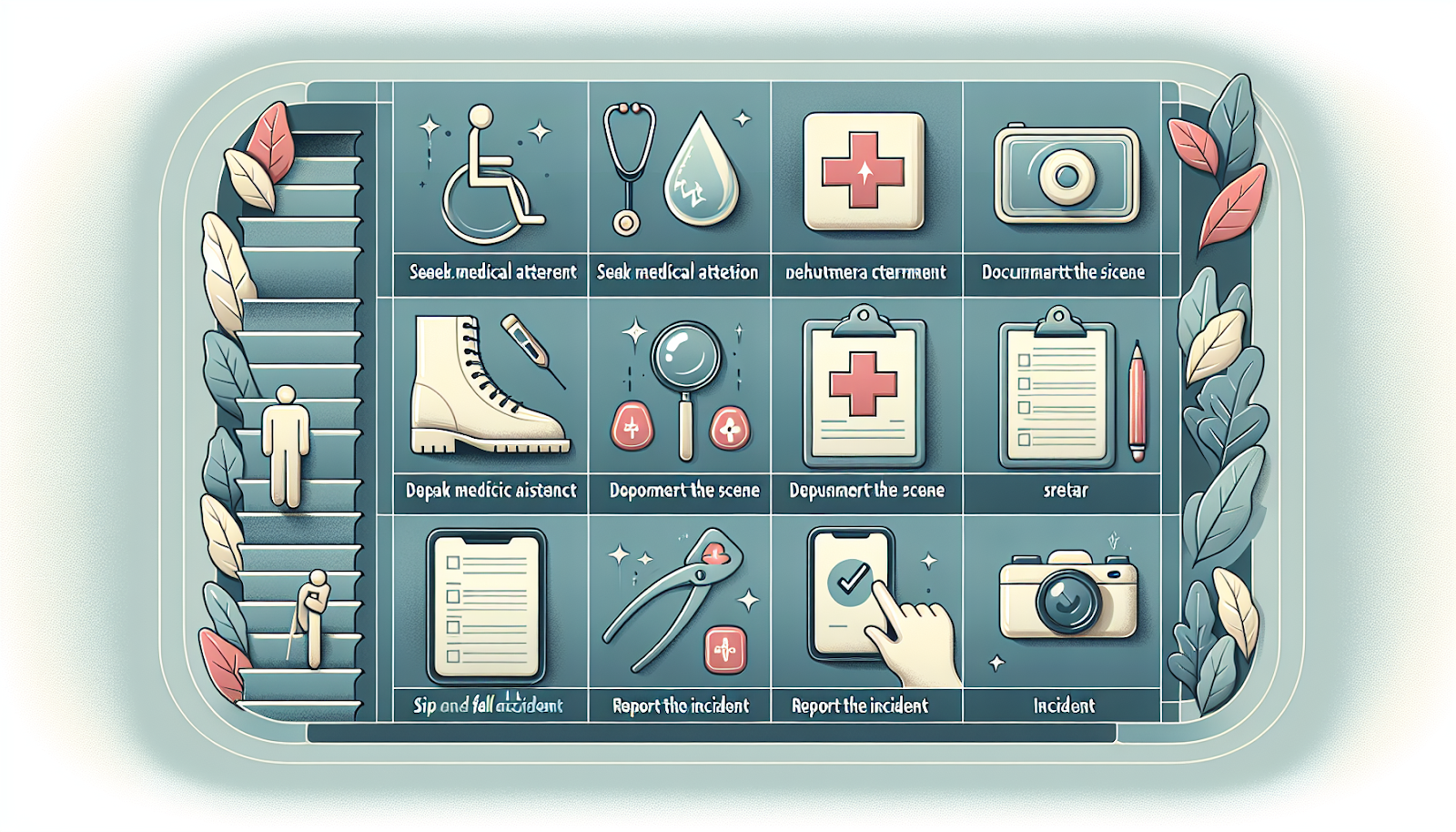
An illustration depicting a slip and fall accident scenario, emphasizing the legal rights of slip and fall victims in Newport Beach.

Slip and fall accidents, also referred to as premises liability, occur when an individual is injured due to hazardous conditions on someone else’s property.

These incidents are a significant cause of personal injury claims in California, including Newport Beach.

Common causes of such accidents include:

  • Wet floors
  • Poor lighting
  • Uneven surfaces
  • Defective stairs
  • Lack of handrails
  • Cluttered walkways

These accidents can lead to severe injuries, ranging from broken bones to traumatic brain injuries. In fact, slip and fall incidents account for over 1 million emergency room visits in the U.S. each year, representing 12% of all fall-related hospital visits. Fall accident victims often face not only physical pain but also significant financial burdens due to medical expenses, fall injuries, lost wages, and fall injury.

Victims of slip and fall accidents may be entitled to personal injury claims if hazardous conditions were present and the property owner failed to maintain a safe environment. This can lead to a slip and fall lawsuit against the negligent party. Knowing the common causes and impacts of these accidents is the first step in protecting your rights and seeking justice.

Legal Responsibilities of Property Owners

In California, property owners have a legal responsibility to maintain a reasonably safe environment for individuals on their premises. They must ensure that any potential hazards are addressed promptly and that visitors are informed of any existing dangers. This duty of care is non-transferable and cannot be assigned to another party.

To avoid liability, property owners are required to take reasonable precautions to prevent slip and fall accidents. This includes regular maintenance, prompt repair of defects, and clear signage to warn of potential hazards. Failure to meet these responsibilities can result in premises liability claims against the property owner.

The liability for unsafe conditions can extend beyond property owners to include property managers and landlords. This is especially important in cases involving rental properties or commercial spaces where multiple parties may be responsible for maintaining safety standards.

Both property owners and visitors must understand these legal responsibilities to prevent and address slip and fall accidents effectively.

Steps to Take After a Slip and Fall Accident

Steps to Take After a Slip and Fall Accident

Before: If you find yourself a victim of a slip and fall accident, the first step is to seek medical attention immediately, even if your injuries seem minor at first. Prompt medical evaluation can identify hidden injuries and provide documentation for your personal injury claim.

After:

  1. Seek medical attention immediately, even if your injuries seem minor at first.
  2. Prompt medical evaluation can identify hidden injuries.
  3. Medical documentation is important for your personal injury claim.

Documenting the accident scene is also crucial. Take photographs of the area where the fall occurred, noting any hazards such as wet floors or poor lighting. Write detailed notes about the circumstances leading up to the fall and gather contact information from any witnesses. This evidence can strengthen your case and support your fall accident claim for compensation.

Refrain from discussing your case publicly or on social media until your legal matter is resolved. Be cautious about signing any documents or providing detailed information to insurance companies without consulting a personal injury lawyer. An experienced attorney can guide you through the legal process, ensuring that you take the necessary steps to build a strong personal injury case and seek the compensation you deserve.

Proving Negligence in Slip and Fall Cases

Proving negligence in a slip and fall case is crucial to securing compensation. To succeed in a slip and fall lawsuit, you must demonstrate that the property owner or occupier failed to meet their duty of care, resulting in dangerous conditions. For instance, property owners must address known hazards like wet floors or uneven surfaces or provide adequate warnings to visitors.

Evidence plays a key role in establishing negligence. Photographs of the accident scene, eyewitness accounts, and expert testimony can help prove that the hazardous condition was unreasonably dangerous and that the property owner had notice of the condition. In some cases, market sweeping logs and cleaning records can also be used to establish liability.

Attorneys at Easton & Easton, LLP use various tools, including expert witness testimony, to demonstrate that a slip and fall accident was caused by a dangerous condition. Gathering and presenting comprehensive evidence helps victims establish the property owner’s negligence and strengthen their personal injury claims.

Types of Damages Recoverable in Slip and Fall Claims

Types of Damages Recoverable in Slip and Fall Claims

Victims of slip and fall accidents can seek compensation for a variety of damages. Economic damages include quantifiable monetary losses such as medical expenses, lost wages, and property damage. These damages cover both immediate costs and future financial losses from ongoing medical treatment and rehabilitation.

Non-economic damages, on the other hand, pertain to intangible losses like emotional distress and loss of enjoyment of life. Compensation for pain and suffering and the impact on daily activities can be significant. Each case is unique, and the calculation of non-economic damages often requires expert testimony to illustrate the emotional and psychological impact of the accident.

In some cases, victims may also seek punitive damages if the property owner’s conduct was particularly egregious. Recovering these various types of damages allows victims to address the full scope of their losses and work towards rebuilding their lives after a slip and fall accident.

Statute of Limitations for Slip and Fall Claims in Newport Beach

Statute of Limitations for Slip and Fall Claims in Newport Beach

The statute of limitations for filing slip and fall claims in California is typically two years from the date of the injury. This means that victims must initiate legal action within this period to preserve their right to seek compensation. If the claim is against a government entity, the filing period is significantly shorter, usually limited to six months.

The clock for the statute of limitations starts when the injured party becomes aware of their injury. In some cases, injuries may not be immediately evident, which can extend the filing deadline. Victims should act promptly and consult a slip and fall attorney to ensure all legal deadlines are met.

Understanding and adhering to the statute of limitations is essential for protecting your legal rights. Missing these deadlines can result in the loss of your ability to seek compensation, making timely action a critical component of any slip and fall claim.

Common Defenses Used by Property Owners

Property owners often employ various defenses to avoid liability in slip and fall cases. One common defense is claiming they were unaware of the hazardous condition on their premises. They may argue that they took reasonable precautions to prevent accidents, shifting the burden of proof to the injured party to show these measures were insufficient.

Another defense is the “open and obvious” doctrine, suggesting that the hazard was apparent enough that a reasonable person should have avoided it. The “choice of ways” defense posits that the injured party could have chosen a safer path, implying negligence on their part.

Contributory and comparative negligence are also frequently used defenses. Under contributory negligence laws, any fault on the part of the injured party can bar recovery. Comparative negligence allows for recovery in proportion to the other party’s fault, potentially reducing the compensation awarded.

Effectively countering these defenses is vital for strengthening your slip and fall case.

The Role of Expert Witnesses in Slip and Fall Lawsuits

Expert witnesses play a pivotal role in slip and fall lawsuits by providing specialized knowledge that helps clarify complex details beyond the understanding of laypersons. Accident reconstruction experts, for instance, analyze evidence to recreate the incident’s sequence, helping to establish liability. Engineering experts assess safety standards and mechanical failures to determine if negligence contributed to the incident.

These experts help courts understand the link between the property owner’s actions or conditions and the injuries sustained by the victim. Proficient attorneys utilize expert witness testimony to illustrate the extent of injuries and future medical needs, significantly strengthening the case.

Evaluating the qualifications, communication skills, and objectivity of expert witnesses is crucial in selecting the right ones. Their insights and testimony can be crucial in establishing the negligence of the property owner and securing fair compensation for the victim.

How a Newport Beach Slip and Fall Attorney Can Help

A cartoon representation of a Newport Beach slip and fall attorney assisting a client.

Hiring a Newport Beach slip and fall attorney can make a significant difference in the outcome of your case. These experienced professionals help ensure victims receive maximum compensation by fighting for their rights and establishing liability. Attorneys assist with gathering evidence, assessing the incident, and proving negligence, which are critical steps in building a strong fall accident attorney case.

Legal representation also means that victims can focus on their recovery while attorneys navigate the complexities of the legal process. This often leads to higher settlement amounts, as attorneys negotiate effectively with insurance companies to secure fair compensation for both economic and non-economic losses.

Moreover, having an experienced lawyer by your side can provide immense relief and confidence, knowing that your case is being handled by someone with the expertise to anticipate and address potential issues. In summary, a dedicated slip and fall attorneys is an invaluable ally in seeking justice and fair compensation.

Summary

In conclusion, understanding the legal landscape of slip and fall accidents in Newport Beach is essential for protecting your rights and seeking fair compensation. From recognizing the responsibilities of property owners to knowing the steps to take after an accident, this guide provides a comprehensive overview of the key elements involved in these cases.

By hiring an experienced slip and fall attorney, victims can navigate the legal complexities with confidence and focus on their recovery. Remember, timely action and thorough documentation are crucial in building a strong case and securing the compensation you deserve.

Frequently Asked Questions

What should I do immediately after a slip and fall accident?

It is crucial to seek medical attention immediately after a slip and fall accident, document the scene, and collect witness information. Additionally, refrain from discussing your case publicly or with insurance companies before consulting a lawyer.

How can I prove negligence in a slip and fall case?

To prove negligence in a slip and fall case, you must demonstrate that the property owner did not uphold their duty of care, leading to hazardous conditions. Collecting evidence like photographs, eyewitness accounts, and expert testimony is essential to support your claim.

What types of damages can I recover in a slip and fall claim?

In a slip and fall claim, you can recover economic damages, such as medical expenses and lost wages, as well as non-economic damages for emotional distress, pain, and suffering. Additionally, punitive damages may be awarded in certain circumstances.

How long do I have to file a slip and fall claim in Newport Beach?

You have two years from the date of your injury to file a slip and fall claim in Newport Beach. However, if your claim is against a government entity, it must be filed within six months.

How can a slip and fall attorney help me with my case?

A slip and fall attorney can effectively establish liability and gather essential evidence, while also negotiating with insurance companies to secure the maximum compensation you deserve for your injuries. Engaging their services is crucial for navigating the complexities of your case.

Finding the proper legal support after a birth injury can be overwhelming, especially when your family’s future is at stake. Your chosen lawyer should align with your needs, values, and goals.

1. Experience Handling Birth Injury Cases

Not every personal injury attorney handles birth injury claims. These cases often involve both complex legal frameworks and extensive medical records. You need someone with a history of working on cases involving conditions like cerebral palsy, brachial plexus injuries, or hypoxic-ischemic encephalopathy. A strong background in birth injury law often reflects a lawyer’s understanding of what it takes to build a case involving obstetric negligence, delayed C-sections, or failure to monitor fetal distress.

When reviewing a lawyer’s background, look at the types of cases they’ve worked on and the results they’ve achieved. Although no two outcomes are the same, past performance can provide confidence in their ability to handle the road ahead.

2. Is the Lawyer Familiar With Medical and Legal Complexities?

This is one of the most common and important questions parents ask. Birth injury cases often require a careful review of delivery room procedures, fetal monitoring data, and timelines that show when decisions should have been made. A lawyer working in this area must understand both the legal standards for medical negligence and the medical indicators that prove or disprove accountability.

In many cases, legal teams work alongside medical consultants to interpret the records and build a firm timeline of events. Your lawyer should know how to collaborate with these professionals and use their insights to develop a strong argument. They should also be capable of translating complex concepts into terms you can understand, so you’re always informed about your options and the direction your case is taking.

3. Clear Fee Structures and Case Evaluation

Hiring a lawyer shouldn’t mean financial uncertainty. A reasonable birth injury attorney will explain their fee structure clearly—whether it’s contingency-based (meaning they only get paid if you win) or follows another model. You should never feel pressured to sign anything without understanding the full scope of the financial commitment.

Initial consultations should always be free. During that meeting, the attorney should ask thoughtful questions about your child’s condition, medical history, and what you’ve experienced since the birth. In return, they should offer a transparent assessment of whether they believe you have a case and what the process may involve.

4. Do They Prioritise Compassion and Client Communication?

Birth injury cases are emotionally charged. Parents are not just pursuing financial recovery—they’re seeking answers, accountability, and justice for their children. For this reason, your lawyer should be someone who approaches your case with compassion and empathy.

Ask yourself: Does this lawyer take the time to listen? Do they explain the process in a way that’s easy to understand? Are they responsive when I have questions?

Some attorneys may focus only on the legal elements of a case. But at Kohan & Bablove Injury Attorneys, we understand that birth injuries impact families on a deeply personal level. How your legal team communicates—how often, how clearly, and how respectfully—can make a tremendous difference in your comfort level throughout the process.

A responsive, communicative lawyer will ensure you never feel in the dark. Whether it’s regular check-ins, calls before essential deadlines, or simply making time to answer your questions, this level of service helps build trust at every stage.

5. Reputation and Community Standing

In today’s digital world, reviews and testimonials matter. Look for a law firm with a positive reputation—not only in winning cases but in how they treat their clients. What are former clients saying? Did the firm guide them with honesty and integrity? Were they satisfied with the outcome and the support they received along the way?

Reputation also extends to the firm’s views within the local legal and medical communities. A respected birth injury attorney will often attend relevant legal conferences or associations, be involved in their community, and maintain strong working relationships with investigators, consultants, and other legal professionals.

When checking a firm’s reputation, consider:

  • Online reviews across multiple platforms
  • Case outcomes, especially for similar birth injury claims
  • Community involvement and advocacy work
  • How they respond to both positive and critical feedback

Why the Right Lawyer Matters So Much in Birth Injury Cases

A birth injury lawyer does more than file paperwork. They become your advocate during one of the most vulnerable times in your life. The right attorney can help recover financial compensation that supports your child’s medical care, therapy, assistive devices, and even long-term housing needs. They can also seek justice on your behalf and push for accountability in the healthcare system.

It is essential to choose someone who sees your child as more than a file number and who is committed to fighting for their future.

Common Mistakes to Avoid When Choosing a Lawyer

Here are a few pitfalls to avoid:

  • Going with the first lawyer you find: Always consult with at least two or three attorneys before deciding.
  • Choosing based only on ads: A flashy ad doesn’t guarantee competence.
  • Not asking about similar case results: If the firm hasn’t worked on birth injury cases, they may not be equipped for the challenges ahead.
  • Ignoring your gut feeling: Trust your instincts if something feels off during the consultation.

How Kohan & Bablove Injury Attorneys Can Help

At Kohan & Bablove Injury Attorneys, we know how overwhelming the aftermath of a birth injury can be. Our team is committed to helping Houston families understand their rights, evaluate their options, and pursue the best possible outcome for their child’s future. We approach every case with care, clarity, and purpose, working closely with you every step of the way.

We welcome speaking with you, whether you’re still gathering information or ready to take legal action.

Final Thoughts

Choosing a birth injury lawyer is one of the most important decisions you can make following a traumatic experience during childbirth. This isn’t just about recovering compensation—it’s about protecting your child’s future and your family’s peace of mind.

Look for a lawyer who combines real experience with compassion, clarity in communication, and a commitment to your child’s well-being. Take your time, ask questions, and don’t be afraid to leave a firm that doesn’t feel like the right fit.

Request a Consultation